Elevators sit in everyday life, but most people do not pause to think about how they work. In many cities, a few lifts stand out. Some are known for how fast they move. Others are known for views that catch your eye. A few are remembered for their past. Together, they show how much vertical travel has improved over time.
At Logolift, we build high quality elevators for houses and bungalows. We also study well known examples around the world when we design. In this post, we look at notable elevators and the lessons they offer for safety, comfort, and home style.
Why these well known lifts matter for buyers
You might ask how a lift in a tall tower connects to a home lift. The link is clear. Many of the main goals are the same. You still want steady start and stop. You still need dependable braking. You want a quiet ride. And you need strong safety for the people inside. Whether the trip is long or short, the basics matter. When you see how top elevators are made, you can also choose a better residential lift. You can ask smarter questions before you commit.
The Fastest Elevators in the World
Speed is what makes many elevators famous. These are some of the fastest ever built.
Guangzhou CTF Finance Centre, China
Guangzhou has a 530 meter tower. Inside it, some of the quickest lifts in the world run at about 21 m/s, which is close to 75 km/h.
Speed and Technology
Engineers use advanced motors and precise control systems so that passengers barely feel the acceleration, even at these speeds.
Passenger Comfort
Air pressure inside the cabin is managed carefully, so your ears stay comfortable during the ride.
Shanghai Tower, China
Standing at 632 metres, Shanghai Tower is one of the tallest buildings on Earth. Its elevators, built by Mitsubishi Electric, travel at around 20.5 metres per second.
Smooth and Silent
Special guide rollers and active vibration control keep the ride steady and quiet, a feature every good home lift should also offer.
Taipei 101, Taiwan
For years, Taipei 101 held the title of the world’s tallest building. Its observatory elevators carry visitors to the 89th floor in only about 37 seconds.
Pressurised Cabins
The cabins are pressurised to protect passengers from sudden pressure changes, showing how comfort is engineered into every detail.
Burj Khalifa, Dubai
The Burj Khalifa, at 828 metres, is the world’s tallest building. Its elevator system includes double-deck cabins that carry many passengers at once and move at several metres per second.
Smart Traffic Management
Intelligent control software decides which elevator serves which floor, cutting waiting time. It is the same idea behind the smart controls in Modern home lifts.
Iconic Elevators with Stunning Views
Some elevators are famous not for speed but for the experience of the ride itself.
Bailong Elevator, Zhangjiajie, China
Built along a sandstone cliff, the Bailong Elevator rises roughly 326 metres and is often called the tallest outdoor elevator in the world. Its glass cabins give riders sweeping views of the mountains as they climb.
Why It Inspires Home Design
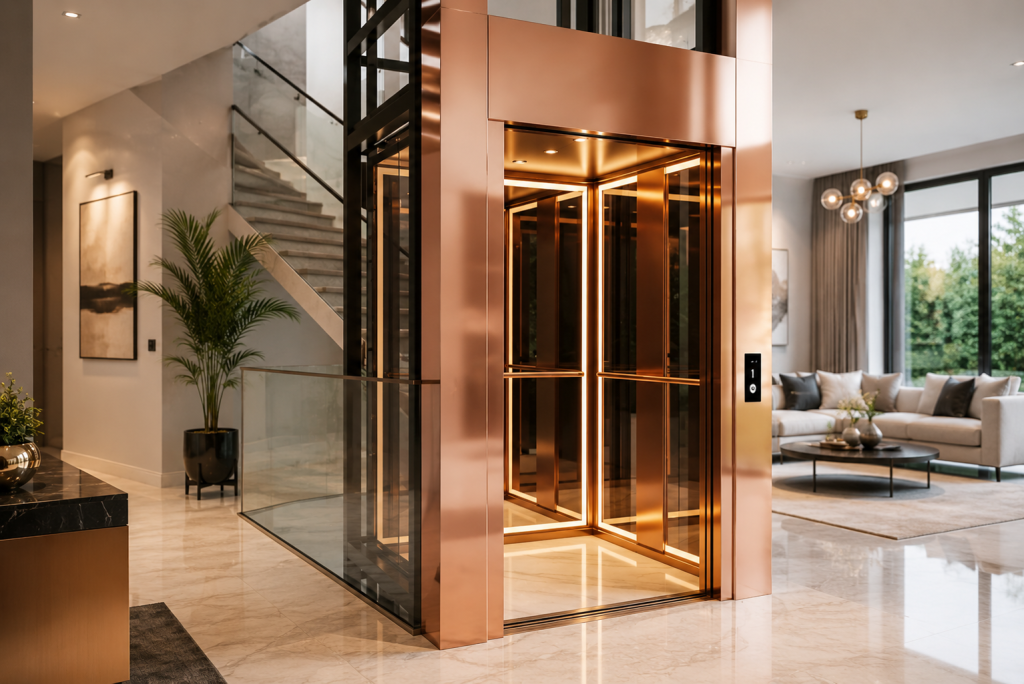
Panoramic glass cabins are becoming popular in luxury bungalows. A glass lift can turn a simple staircase alternative into a design feature.
Hammetschwand Lift, Switzerland
Located near Bürgenstock, this open-air lift climbs about 150 metres up a cliff face and has been running since the early 1900s. It is one of the oldest and highest outdoor lifts in Europe.
Built to Last
More than a century of service proves that quality materials and regular maintenance keep a lift reliable for generations.
Historic Elevators That Changed Cities
Elevador Lacerda, Salvador, Brazil
Opened in 1873, this 72-metre elevator connects the lower and upper parts of Salvador. It is still used every day and has become a symbol of the city.
A Lift as a Landmark
It shows that a well-designed lift is more than a machine. It can become part of a building’s or a city’s identity.
The Eiffel Tower, Paris
Since it opened in 1889, the Eiffel Tower has carried visitors upward in specially designed elevators that follow the tower’s curved legs. Their hydraulic technology was a major engineering achievement of its time.
Hydraulic Lifts Then and Now
Hydraulic Lift systems remain a trusted choice today, especially for homes, thanks to their smooth movement and dependable performance.
What These Elevators Teach Us About Home Lifts
You do not need a skyscraper to benefit from world-class engineering. Here is what homeowners can learn.
Safety Comes First
Every Gamous Elevator relies on multiple safety layers such as emergency brakes, backup power, and overspeed protection.
What to Look For in Your Home Lift
Ask about emergency lowering, door interlocks, battery backup, and certified safety components before buying.
Smooth Rides Build Trust
Passengers judge an elevator by how it feels. Jerks, noise, and vibration reduce confidence, especially for children and elderly family members.
Quiet Operation
A well-engineered home lift should run almost silently, so it fits naturally into a peaceful living space.
Design Should Match Your Lifestyle
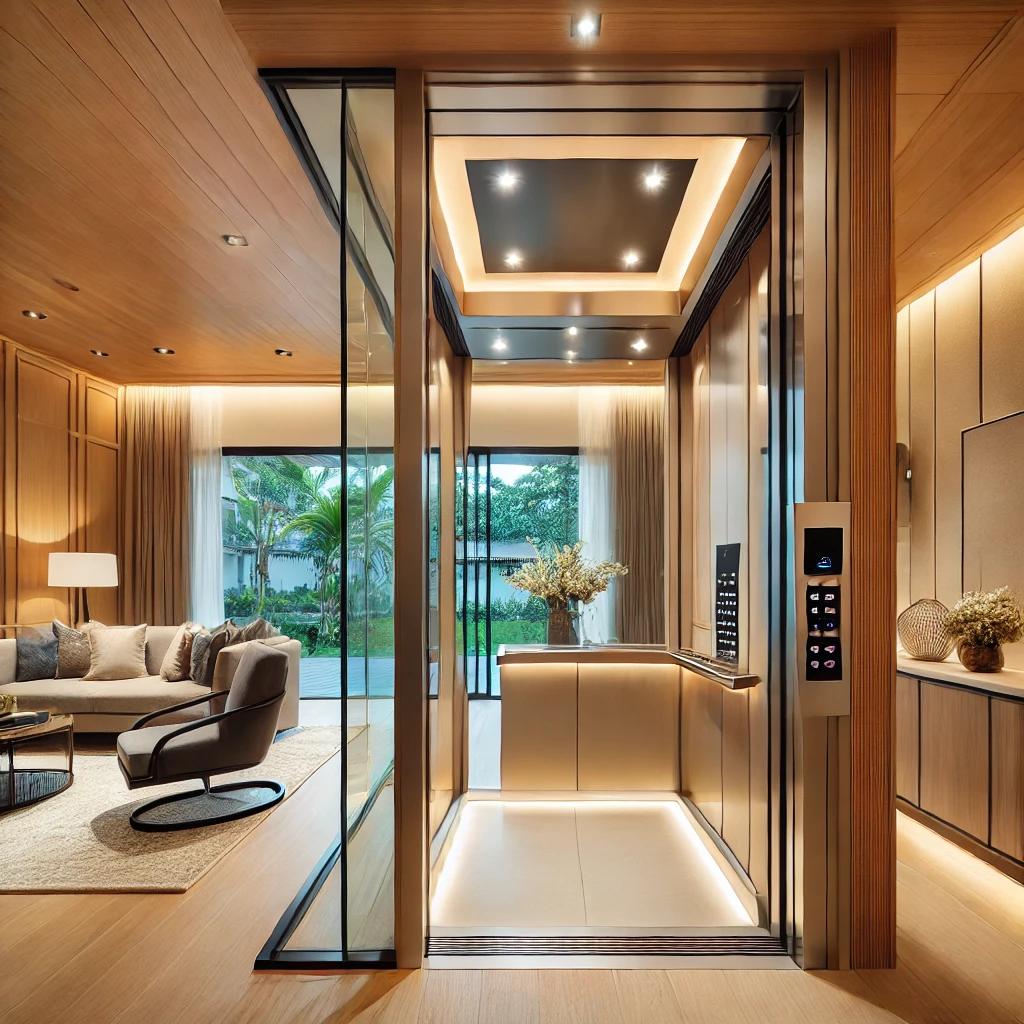
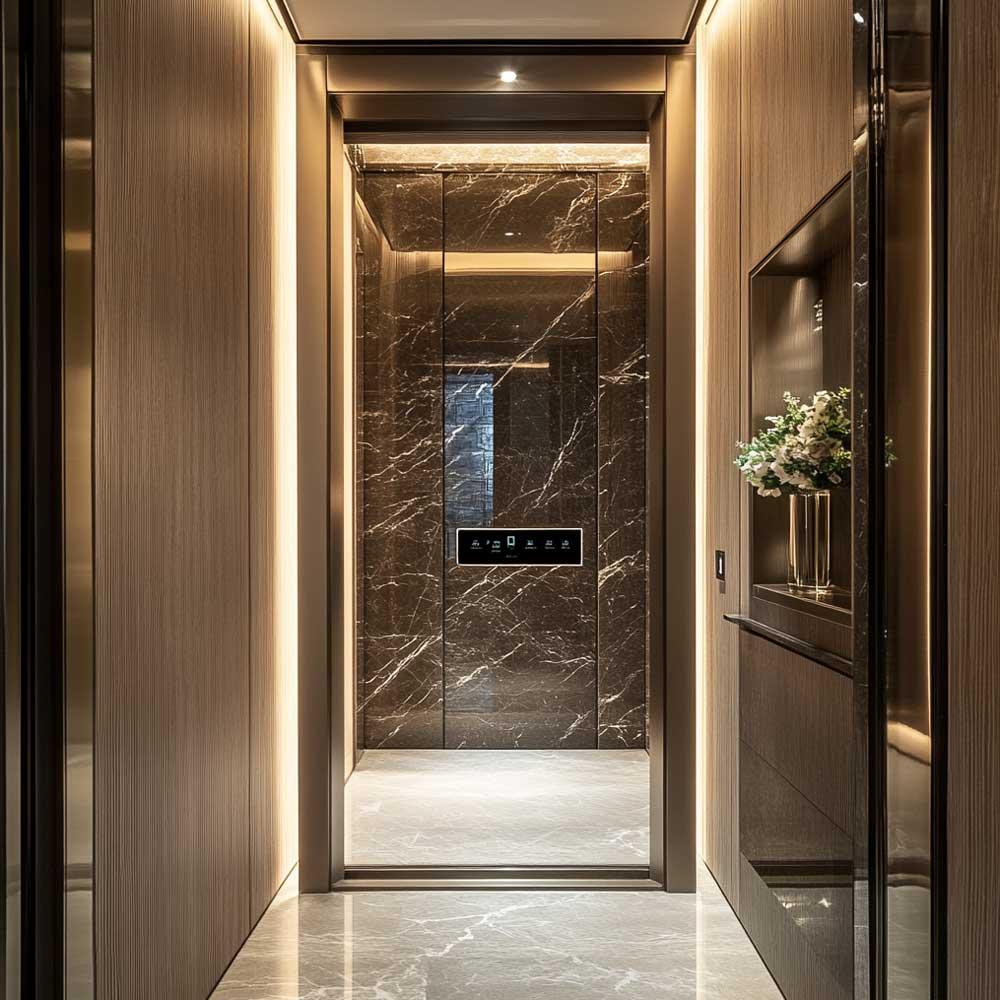
From glass panels to warm wooden finishes, the cabin should feel like an extension of your home’s interior.
Space-Saving Solutions
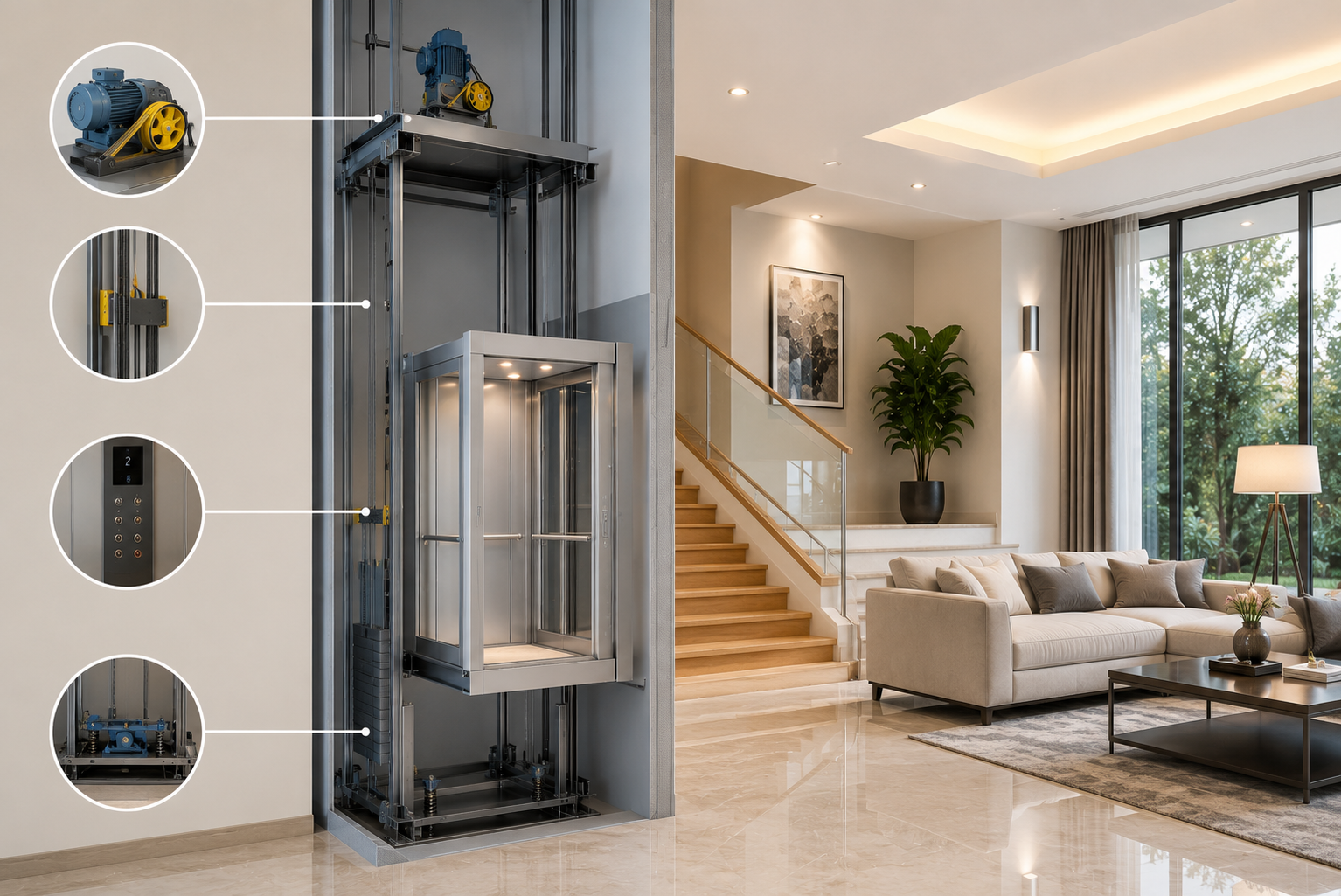
Modern hydraulic and compact home lifts need less space and can be planned even in existing bungalows.
Why Choose Logolift for Your Home Elevator
Logolift brings the same attention to safety, comfort, and style to homes across India. We specialize in premium bungalow elevators that are smooth, silent, and smart.
What Makes Logolift Different
Custom-Crafted Designs
Every home is different, so we create lift solutions that suit your space, your interiors, and your budget.
Advanced Hydraulic Performance
Our lifts are designed for whisper-quiet travel and dependable, everyday use.
Modernisation and Service Support
Already have an older lift? Our modernisation solutions upgrade efficiency, safety, and appearance, backed by reliable service and support.
Presence Across Major Cities
We serve customers in Surat, Mumbai, Pune, Ahmedabad, Bangalore, and Chennai.
Conclusion
From the record-breaking speed of Guangzhou and Shanghai to the scenic Bailing Elevator and the historic Elevator Lacierda, famous elevators show how engineering can make movement safer, faster, and more beautiful. The lessons are clear: priorities safety, insist on a smooth and quiet ride, and choose a design that suits your lifestyle.
If you are planning a home lift, Logolift can help you bring that world-class experience into your own space. Visit our virtual showroom, explore our products, or call +91 9974053532 to book a free consultation today.
A house should feel easy to live in for everyone in the family. In many modern Indian cities, homes are built up in more floors. Then going from one level to another can feel hard each day for older parents, kids, and anyone who finds stairs difficult. That is why a single floor home elevator can be a smart and good looking choice.
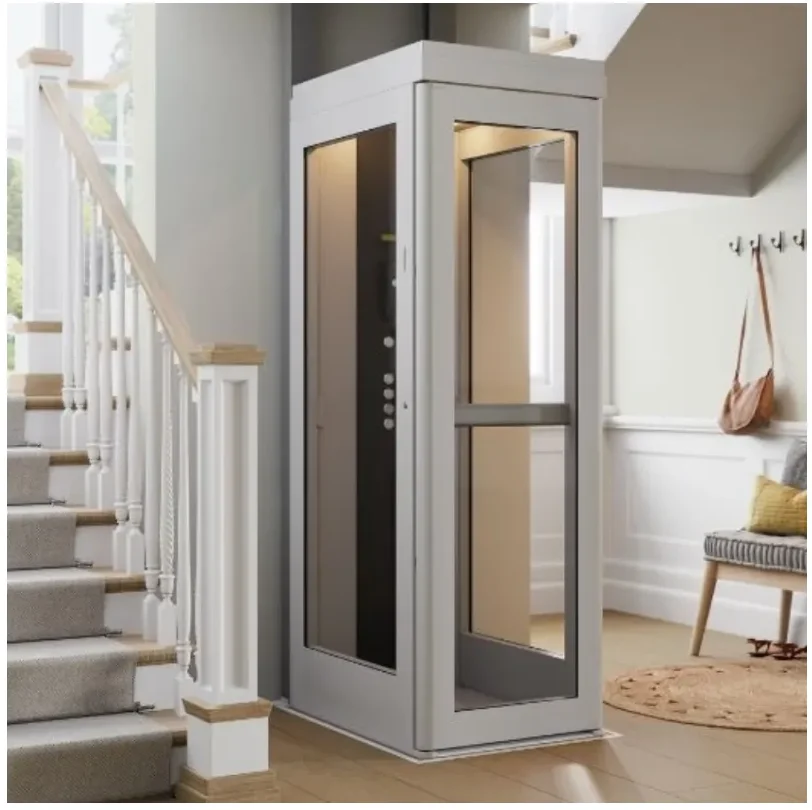
People do not see Residential lifts as only for big luxury homes or offices anymore. Smaller home lift options can fit independent houses, duplexes, Bungalows, and similar properties. Many owners want a simple way to move between levels without stress.
If your home has the ground floor and a first floor, a one floor lift can make daily life smoother. It can also blend into the look of your home and add to its design.
What Is a Single Floor Home Elevator?
A one-stop Floor home lift is made for a house and connects two levels, like the ground level and the next floor.
A home lift is built for everyday use, not for big crowds. You can pick the cabin space, the ride height, the way the buttons work, and the safety parts. The installer can also set it up to match how the home is built and what the family needs.
A Compact home elevator can be Especially useful in:
Independent homes
Duplex homes
Bungalows
Villas
Multi-level residences
Premium apartments
Homes with elderly family members
The room size and technical needs can change based on how the elevator is set up and what the site is like. Because of that, it helps to have a site pro look things over first before you choose a unit.
Why Are Home Elevators Becoming Popular in India?
Indian house layouts are shifting. More families are putting up higher buildings to use their plots well, even though many older homes already have several floors.
For some people, stairs feel fine right now. But as relatives age, using them every day can turn hard. Moving groceries, bags, or daily items up and down between levels can also be a pain.
A home lift can help with moving between floors. It gives a way to travel up and down without making everyone rely on steps.
For older family members, a residential Elevator can help them reach bedrooms, the living room, terraces, and other levels. They can stay in the same home and still move around with less trouble.
The same lift can help after an injury or surgery. It can also support wheelchair users and anyone who cannot manage stairs often.
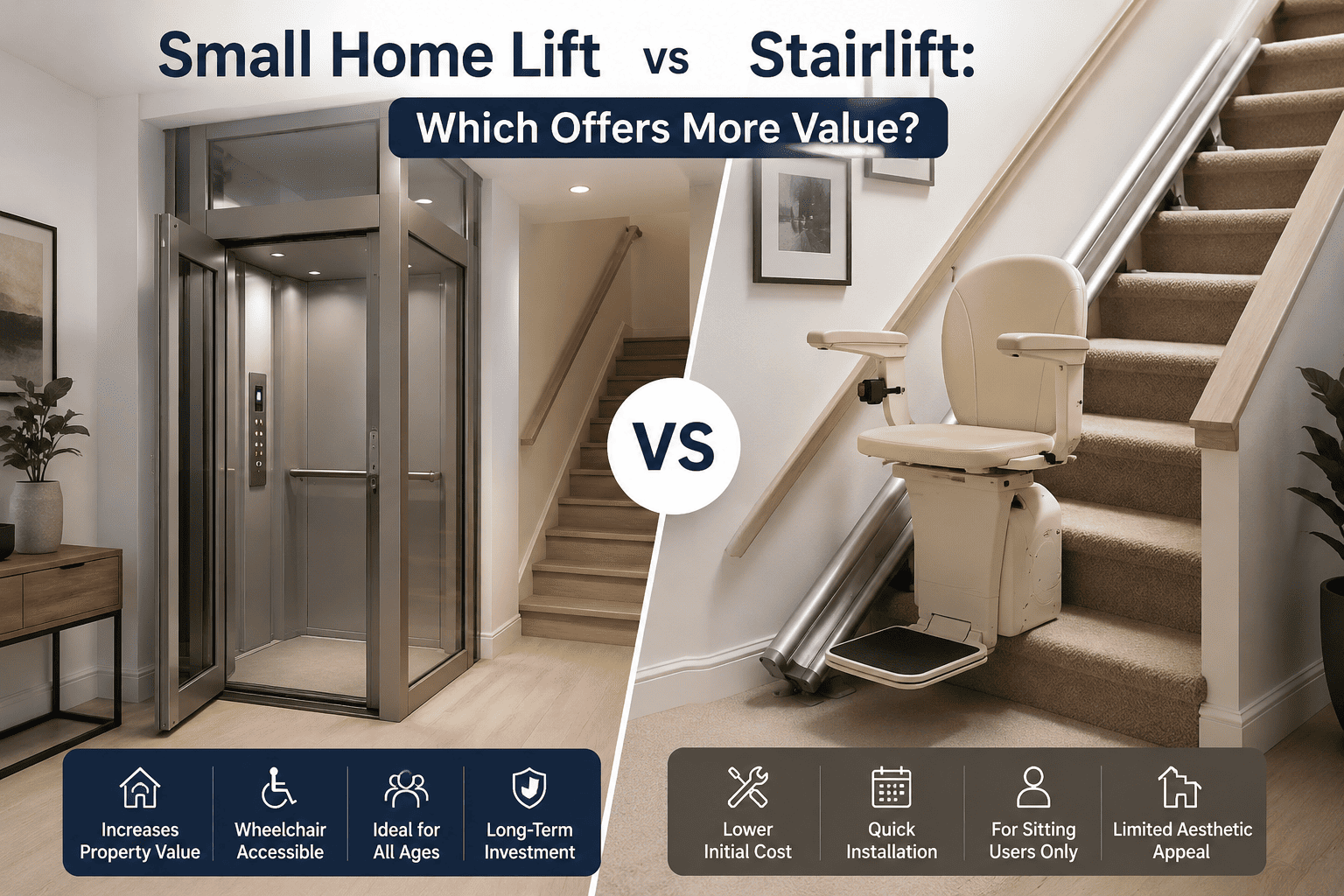
Home Elevator vs Stairlift
Some homeowners weigh a stairlift and a Residential Elevator as they look for help with access.
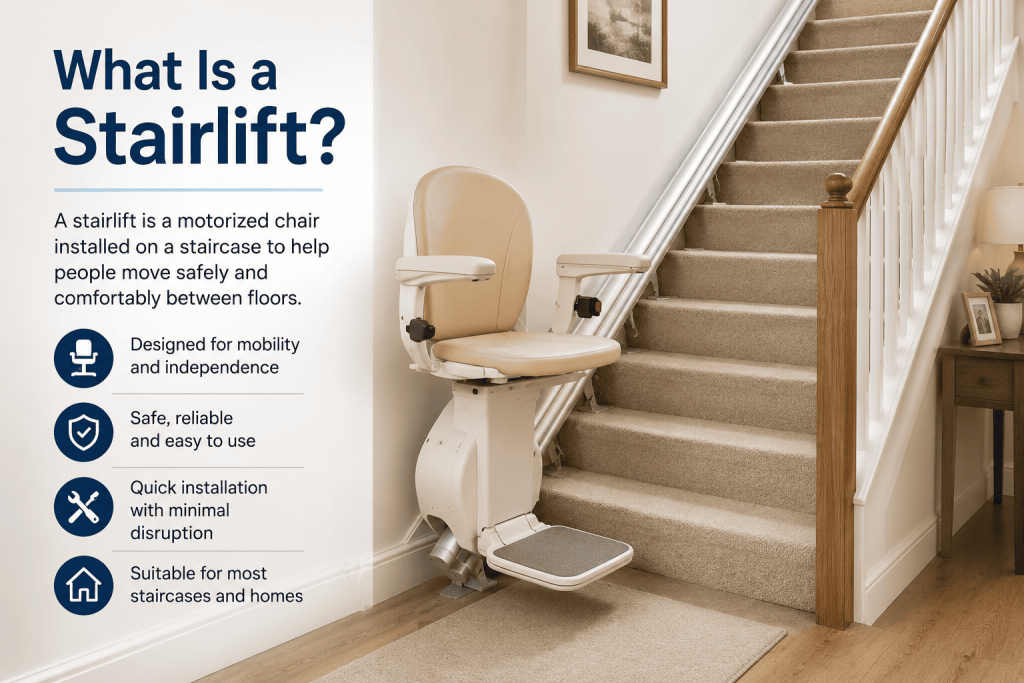
A stairlift rides up and down along the stairs. A Home Elevator runs in its own space to carry you between levels.
A Residential elevator can work well for a household. It can be set up for more than one person, and it can also make it simpler to take things from one floor to another.
For example, a Home Elevator can be useful when carrying:
Groceries
Luggage
Shopping bags
Household supplies
Small furniture items
Mobility equipment
A stairlift, on the other hand, is primarily designed to transport an individual along the staircase.
The right choice depends on the home’s architecture, available space, accessibility requirements, budget, and intended use.
Important Safety Features in a Home Elevator
Safety should always be a priority when choosing a residential elevator.
A modern home lift can incorporate safety systems designed to provide controlled and reliable operation. Depending on the elevator configuration, homeowners may consider features such as:
Door sensors
Emergency alarm
Automatic rescue operation
Battery backup
Overload protection
Emergency lighting
Secure floor access
Controlled stopping
Door obstruction detection
LogoLift focuses on safety and easy daily use in its elevator products. It lists items like door sensors and emergency systems. It also mentions backup functions and other related tech made for homes.
If you are looking at a home elevator, ask the dealer or installer to walk you through the safety parts in the exact unit they want to install. Make sure you understand what is included on that specific model.
Choosing the Right Home Elevator Design
A home elevator has to do more than work well. It should also fit the look of your house and match what is already inside.
Today you can find residential elevators in many styles. People choose different cabin finishes. They can pick door types, lighting, flooring, wall panels, and control layouts.
If your home feels modern, you might like a simple cabin. Clean surfaces and glass parts often look right.
If your house is a classic bungalow or a luxury villa, you may want a richer cabin interior. That kind of detail can echo the style of the building.
LogoLift builds elevator systems for specific technical needs and design goals. The team adjusts each option to fit tight areas and to work within site limits. This makes it easier for the elevator to match the rest of the building plan.
For homeowners interested in exploring different Residential Elevator styles, you can view LogoLift’s Elevators to explore residential, bungalow, and other elevator solutions.
Compact Home Elevators for Limited Spaces
Space is a big worry for many homeowners when they think about adding a lift.
Some houses do not have a spare room or a wide area where a regular elevator shaft could go. That is where smaller home elevator options can help, especially in tight spaces.
Where the unit ends up depends on the setup. In some cases it sits close to the stairs. In other cases it fits in a corner or next to something already built. Sometimes it can be placed in another spot that makes sense for the layout.
Even so, you cannot lock in the size just by using generic figures from the web.
The Installer needs to look at the home first and check things like:
Available floor area
Floor-to-floor height
Structural conditions
Door location
Shaft requirements
Electrical requirements
Pit and headroom
Number of floors
LogoLift says it builds custom solutions for tight spaces. It also works with a range of building needs.
Custom Elevators for Unique Residential Requirements
Every home is different, which means a standard elevator may not always be the ideal solution.
A custom elevator lets homeowners, architects, and builders set up the lift to fit the home. They can match the system to what the property needs.
Customization can involve:
Cabin dimensions
Door configuration
Interior finishes
Glass design
Lighting
Control panels
Travel requirements
Capacity
Installation conditions
LogoLift offers a range of elevator options. This includes panoramic lifts. It also includes hydraulic and traction units made to fit the site. There are other specialty lift systems too.
For people who design and build a standout home, that choice matters. The elevator can match the look of the whole project. It should feel planned, not tacked on at the end.
No one rule fits every house elevator. The needed space changes with several details.
It depends on the cabin size, the type of system, how the shaft is laid out, the load rating, the door setup, and the building structure.
So you should not choose a home lift only because a brochure lists a cabin size. A technician should visit the site and check the available area. That check also shows what changes are needed, if any.
If the home already exists, good planning can cut down on extra work to the structure. The home is new, it is easier to include the elevator during the design phase. Then you can plan the shaft, the door positions, the wiring, and the interior look together.
What Should You Consider Before Buying a Home Elevator?
Before choosing a home elevator in India, consider these important factors:
1. Number of Floors
Determine how many floors the elevator needs to serve now and whether future expansion is possible.
2. Capacity
Choose a capacity based on the number of passengers and the items you expect to transport.
3. Available Space
Check the shaft, cabin, door, pit, headroom, and equipment requirements.
4. Safety
Understand the emergency, door, backup, overload, and rescue systems provided.
5. Design
Choose a cabin style that complements your home’s architecture.
6. Technology
Discuss the most appropriate elevator technology based on your home’s layout, travel height, usage, and installation conditions.
7. Maintenance
Ask about regular servicing, warranty coverage, spare parts, and after-sales support.
8. Installation
Understand the installation process and whether civil or electrical work is required.
9. Customization
If your home has unusual space or architectural requirements, ask whether a customized elevator can be designed.
A lift for older adults at home can help with access for years to come. When people get older, steps can feel harder and harder. With a Home lift, moving between floors does not depend only on stairs.
Family members who use a wheelchair, a walker, or similar aids may also find it easier. This depends on the cabin size you choose and how the door area is set up.
Putting the lift in place early can also give you more control. You can pick the spot, shape, and needed specs with less rush before access becomes a big issue.
Why Choose LogoLift for Residential Elevator Solutions?
LogoLift provides elevator options for homes. The lineup includes lifts for bungalows, smaller domestic units, and tailored systems for specific houses. The site also mentions a distributor network across India.
When a basic setup does not work, LogoLift says it can make a Custom House Lift. It designs these systems based on each project’s technical needs and building layout. The company adds that this way of working can fit around space limits, design goals, and site conditions.
That is why custom work matters to architects, builders, and homeowners with plans for unique residential projects.
You can also explore LogoLift’s Custom Solutions to learn more about customized residential and specialized elevator options.
Final Thoughts
A one Single floor home Elevator can fit well in a modern Indian house. You might want it for easier access, day to day comfort, planning for later, or a cleaner look in the design. Pick a home elevator by matching it to what your home needs today.
Think about the room you have. Look at how many levels there are. Check the load it must handle. Review the safety parts. Look at the lift tech. Consider the cabin layout. See what the install team needs. Also plan for upkeep over time.
For homeowners looking for more than a standard lift, a Custom Home Elevator can provide greater flexibility and help integrate vertical mobility into the architecture of the property.
A good plan and the right help can make it easier to move around at home. It can also bring more comfort and better access for daily life. Many people also like how a home elevator can look in a modern space.
A Home elevator is no longer limited to large Luxury Homes. Today, homeowners in Chennai are increasingly considering residential elevators for villas, duplexes, bungalows, and multi-floor houses. A well-planned home elevator can make everyday movement easier, improve accessibility for elderly family members, and add a modern touch to the property.
However, choosing the right Home elevator in Chennai requires more than simply selecting a design you like. Factors such as available space, number of floors, load capacity, safety, technology, maintenance, energy efficiency, and installation requirements should all be considered before making a decision.
LogoLift offers Customized House Elevator solutions in Chennai designed around different residential requirements. Its Chennai-focused guidance also highlights space, floors, design, capacity, safety, and after-sales support as important factors when selecting a home elevator.
Let us look at the major factors you should consider.
1. Understand the Available Space
The first thing to check before selecting a Home elevator is how much space is available in your home.
Every house has a different layout. Some homes have sufficient space for a conventional shaft, while others may require a compact or customized solution.
Before purchasing an Elevator, consider:
Available shaft space
Pit and headroom requirements
Door opening area
Machine or equipment requirements
Structural conditions
Location of the elevator inside the house
Access to each floor
Modern compact home elevators can be designed for homes where space is limited. LogoLift’s Chennai-specific content notes that small residential elevators in Chennai are intended to fit into compact residential layouts while maintaining safety, comfort, and style.
A professional site assessment is therefore an important first step.
2. Consider the Number of Floors
The number of floors your elevator needs to serve directly affects the type and configuration of the system.
For Example, a Home Elevator may connect:
Ground floor to first floor
Ground floor to second floor
Multiple floors in a duplex
Several levels in a villa or bungalow
Your elevator provider should evaluate the total travel height, number of stops, available space, and expected frequency of use before recommending a configuration.
Choosing a system based only on today’s requirements may not always be ideal. If you plan to add another floor in the future, discuss this during the planning stage.
Think about how the elevator will actually be used. Will it normally carry one or two people? Will elderly family members use wheelchairs or walking aids? Will you regularly carry groceries, luggage, furniture, or other household items?
Your requirements can help determine the appropriate cabin size and load capacity.
A larger cabin may provide greater comfort, but it can also require additional installation space. Therefore, the right balance between capacity, comfort, and available space is important.
4. Prioritize Safety Features
Safety should be one of the first questions you ask when choosing a residential elevator.
A modern Home elevator should include appropriate safety systems designed to protect passengers during normal operation and unexpected situations.
Depending on the Elevator configuration, useful safety features can include:
Door sensors
Emergency alarm
Battery backup
Automatic rescue operation
Emergency lighting
Over-speed protection
Door obstruction detection
Emergency communication
Secure floor access
Controlled stopping
For example, LogoLift lists features such as multi-beam door sensors, automatic rescue during power failure, emergency battery backup, abnormal-speed protection, out-of-zone door alarms, and rescue operation among its elevator functions.
When comparing different Home elevators in Chennai, do not look only at appearance or price. Ask the supplier to explain the safety systems included in the specific model being proposed for your home.
5. Think About Chennai’s Residential Environment
The local environment should also be considered during elevator planning.
Chennai homes can vary significantly in design, from compact independent houses to spacious villas and multi-storey residences. The elevator should therefore be selected according to the property’s architecture rather than using a one-size-fits-all approach.
For an existing home, installation may require careful planning to minimize structural changes.
For a new home, it is usually easier to coordinate the elevator design with the architect and structural planning from the beginning.
This is why discussing the elevator during the early design stage can help avoid unnecessary modifications later.
6. Choose a Design That Matches Your Home
A Home Elevator is a functional system, but it can also become part of your interior design.
Today’s residential elevators can be customized with different:
Cabin finishes
Lighting options
Door styles
Flooring
Wall panels
Control panels
Glass elements
Interior colors
The design should complement the architecture of your home instead of looking like an unrelated addition.
LogoLift positions its home elevators around customizable design solution in Chennai, from minimal and contemporary styles to more luxurious interiors. Its virtual showroom also allows homeowners to explore elevator designs and cabin interiors before finalizing their preferences.
7. Compare Elevator Technology
Different residential elevator systems use different technologies. The right option depends on your home’s space, travel requirements, usage, and installation conditions.
Depending on the project, homeowners may explore options such as:
MRL elevators
Hydraulic elevators
Compact residential elevators
Customized home lift systems
Instead of selecting a technology simply because it is popular, ask the elevator company why a particular system is suitable for your property.
A professional assessment should consider factors such as:
This combination will give you a more practical basis for selecting the elevator.
8. Check Energy Efficiency
A home elevator will be used regularly, so energy consumption is another factor worth considering.
Modern elevator systems can incorporate energy-saving technologies such as efficient lighting, automatic lighting and fan shut-off, and standby functions.
LogoLift’s current feature information includes LED cabin lighting, automatic shut-off for cabin lighting and ventilation, and automatic return to a standby floor to help reduce unnecessary energy use.
When discussing your options, ask about expected energy consumption and which components are designed to reduce unnecessary power usage.
9. Consider Installation Time and Process
Installation is another important part of choosing a house elevator.
A good installation process generally involves:
Site inspection
Requirement assessment
Elevator selection
Measurements and drawings
Final design approval
Manufacturing or preparation
Site installation
Testing and safety checks
Handover
Maintenance support
The actual timeline can vary depending on the elevator type, site conditions, customization, civil work, and approvals.
LogoLift states that its home lift systems can be installed within a few days under normal conditions, although the actual project schedule depends on the specific installation.
10. Ask About Maintenance and After-Sales Support
Buying the Elevator is only the beginning. Regular maintenance is important for long-term performance and safety.
Before choosing a company, ask:
Is regular maintenance available?
What does the warranty cover?
How quickly can service be provided?
Are replacement parts available?
Is emergency support available?
Is remote monitoring or connected support offered?
What maintenance schedule is recommended?
A company with an established service process can make ownership easier over the long term.
LogoLift’s buying process also emphasizes consultation, detailed quotations, lift drawings, customization, installation, and ongoing support as part of the overall buying journey.
11. Check the Total Cost Instead of Only the Initial Price
The cheapest elevator quotation is not necessarily the most suitable option.
When comparing house elevators in Chennai, consider the complete project cost, including:
Elevator equipment
Cabin customization
Doors
Installation
Civil or structural work
Electrical requirements
Additional safety features
Maintenance
Warranty
Future service requirements
Ask for a detailed quotation that clearly explains what is included and what may cost extra.
This makes it easier to compare different proposals without focusing only on the initial purchase price.
12. Plan for Future Accessibility
One of the biggest advantages of installing a home elevator is long-term accessibility.
A staircase may be easy to use today, but mobility requirements can change as your family grows older. A residential elevator can make different floors more accessible for elderly family members and people who may have difficulty using stairs.
It can also make everyday tasks easier, such as carrying luggage, groceries, or household items between floors.
Thinking about future requirements during the planning stage can help you choose an elevator that remains useful for many years.
Why Choose a Customized House Elevator in Chennai?
There is no single elevator configuration that works perfectly for every Chennai home.
A compact house may need a space-efficient solution, while a large villa may require a larger cabin and more extensive customization. An existing property may need a retrofit solution, while a new construction project can integrate the elevator into the original architectural design.
LogoLift focuses on customized residential elevator solutions designed around the home’s space, lifestyle, architecture, and accessibility requirements.
The objective should be to create an elevator that feels like a natural part of the house rather than simply adding a machine to the property.
Final Thoughts
Choosing the right house elevator in Chennai requires careful consideration of space, floors, capacity, safety, technology, design, energy efficiency, installation, maintenance, and long-term accessibility.
Before making a decision, arrange a professional site assessment and discuss your home’s exact requirements. Compare specifications and understand what is included in the quotation. Most importantly, select an elevator solution that balances safety, comfort, functionality, design, and long-term support.
For homeowners planning a new villa, duplex, bungalow, or multi-storey residence, a thoughtfully designed Home lift elevator can make everyday movement more convenient while adding a modern and accessible element to the property.
If you are planning to install a home elevator in Chennai, LogoLift provides customized residential elevator solutions and consultation to help you explore the right configuration for your home. You can also explore its 360° virtual showroom before finalizing your elevator design.
Use up and down arrow keys to resize the meta box pane.
Use up and down arrow keys to resize the meta box pane.
Use up and down arrow keys to resize the meta box pane.
Use up and down arrow keys to resize the meta box pane.
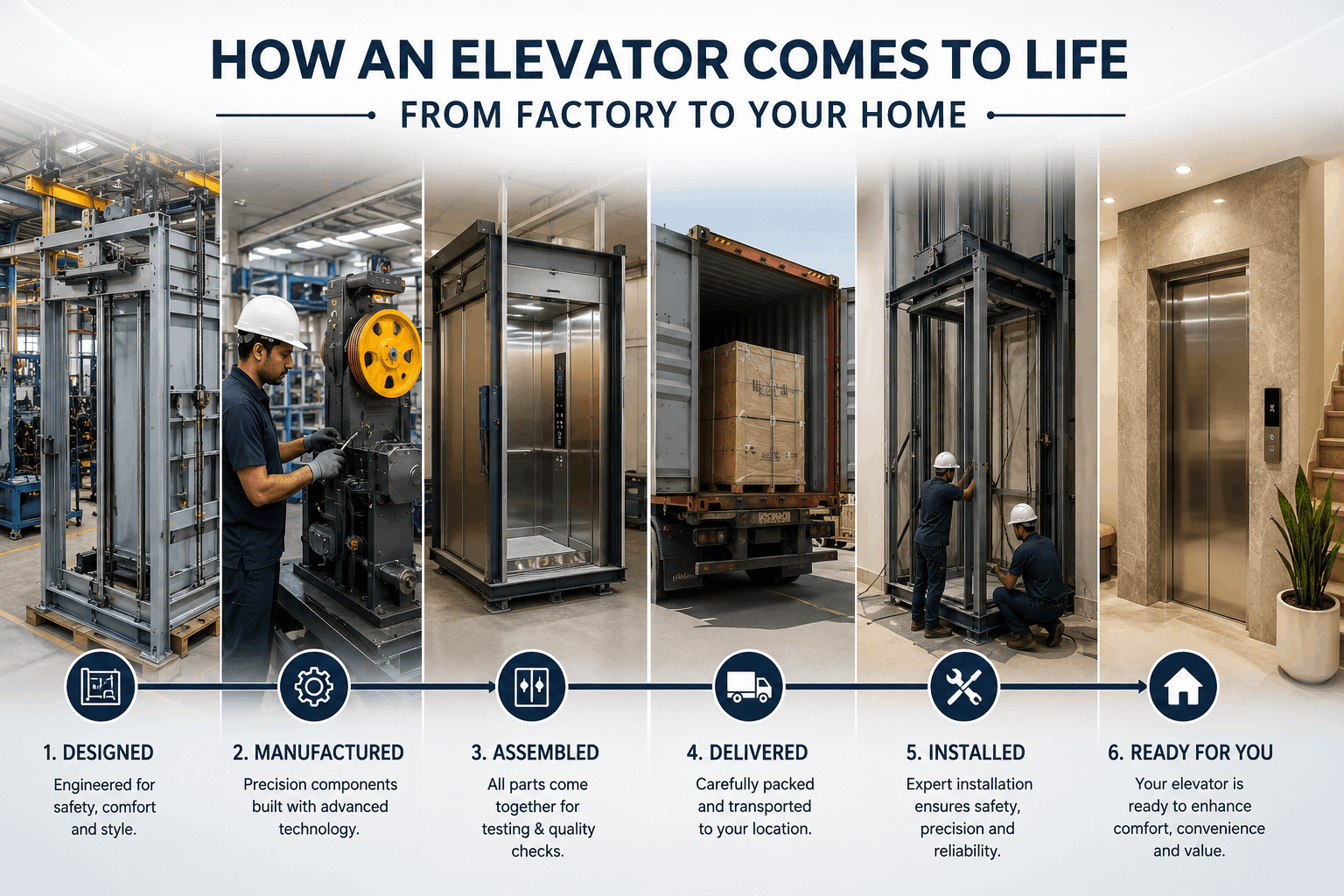
An Elevator can seem basic from the street. Still, a safe ride depends on many steps working together. There is engineering, building in the workshop, setup for a specific site, on site installation, checks after install, and then regular care over time. Each part matters. The work starts with the first sketch in the plant and keeps going until people finally use the new unit. At Logolift, we do not treat elevator choice as a quick pick. We focus on the match for your building.
That means safety first, the right tech, the look you want, the load it must handle, the space it needs, and how well it should perform for years. You might be searching for a home lift in Surat, a residential unit in Mumbai, a commercial lift in Ahmedabad, a hospital elevator in Chennai, or a goods lift in Pune.
In every case, the process starts with proper planning. It ends with skilled fitting and thorough testing. Here is a closer view of how an elevator goes from the factory to your home or business.
Understanding the Elevator Requirement
First you figure out where the elevator will go and what jobs it will do. Each building is different. A small home might need a simple, space saving elevator. A mall or office area may want one that can move lots of people. A hospital setup has to match patient flow. A factory or warehouse often needs an elevator that can handle heavy loads.
During the planning stage, several factors are considered, including:
Building height and number of floors
Available shaft or installation space
Required load capacity
Number of passengers
Travel distance
Frequency of usage
Door configuration
Interior design requirements
Safety requirements
Available power supply
Type of elevator technology
Future maintenance requirements
This information helps engineers determine the most suitable elevator configuration.
Engineering and Elevator Design
First, We confirm the needs and goals. After that, the elevator goes to the engineering and design step. Engineers use math checks and clear drawings. The plan has to cover key items like the size, the weight it must handle, the ride speed, and the building structure.
It also needs the right electrical parts. Safety gear and install details must be part of the design from the start. With a custom job, the work takes extra care. The unit might have to fit in a tight or odd area. It may also need to match a chosen look in the space. At Logolift, we build elevator options for homes, offices, factories, care centers, and other types of buildings.
Selecting the Right Elevator Technology
One of the most important decisions is selecting the appropriate elevator technology.
MRL Elevators
MRL elevators are a type of machine room less system. They do not need a separate machine room the way older designs do. Because the setup is compact, the building can use less area. This also helps with newer design layouts.
You can look at MRL elevators for homes and offices. They fit well when space planning is a key concern.
Hydraulic Elevators
Hydraulic elevators use a hydraulic setup to raise and lower the car. In some buildings, especially low to mid-rise ones, this type can work well. It can also be a good fit when the site limits make hydraulic systems the better option.
Choosing between MRL, hydraulic, or another kind of elevator is not a random call. It depends on things like how tall the building is, how people use the space, what room is available, the expected weight load, the design plan, and what the project needs.
After the design is finalized, the elevator components move into manufacturing.
An Elevator is made up of many interconnected components. These can include:
Elevator cabin
Landing doors
Car doors
Guide rails
Controller
Traction or hydraulic system
Machine and drive system
Ropes and suspension components where applicable
Safety systems
Control panels
Push buttons
Sensors
Electrical components
Emergency systems
Interior finishing materials
Each component has an important role in the overall operation of the elevator.
The elevator cabin, for example, is not simply a box that moves between floors. It is designed around structural strength, passenger comfort, ventilation, lighting, door operation, controls, and aesthetics.
Homeowners may want their elevator to complement their flooring, walls, lighting, doors, furniture, and overall architectural style.
Depending on the project, elevator interiors can be customized in areas such as:
Cabin finishes
Flooring
Ceiling design
Lighting
Handrails
Control panels
Door finishes
Glass elements
Stainless-steel finishes
Decorative materials
This matters a lot for home elevators and residential elevators. In those cases, the lift is not just a way to move between floors. It also blends into the home and becomes part of the interior.
Quality Inspection Before Installation
Before an elevator arrives at the building, its parts have to pass required checks. Factory made parts are reviewed for the right size, surface finish, fit with other pieces, and basic function. Parts for power and parts for movement are tested based on what they are meant to do.
These checks catch problems early, so the work on site is smoother. They also help confirm that each part will work with the rest once the elevator is put together.
Transportation from Factory to Project Site
After the elevator parts are ready, the team packs everything and ships it to the job site.
That site might be a home, an apartment block, a hospital, an office, a mall, a factory, or another type of business place.
For Logolift jobs, the elevators can be delivered and fitted in many parts of India.
Examples include Surat, Ahmedabad, Mumbai, Pune, Bangalore, and Chennai. Other nearby areas may also be used based on what the project needs.
The transport step takes extra care. Elevator parts are big and heavy, and they need to be handled in a careful, correct way.
Preparing the Building for Elevator Installation
Before installation begins, the project site needs to be ready.
Depending on the elevator design, preparation may include:
Elevator shaft readiness
Pit preparation where required
Landing openings
Electrical power availability
Structural requirements
Door openings
Machine or equipment space
Waterproofing where required
Proper measurements and alignment
The rules change based on the elevator model and the layout of the building. That is why the elevator maker, architect, main contractor, electrical crew, and building owner have to coordinate early.
Installing the Elevator Structure
After that, the installers start putting the elevator system together at the job site. First, they set up the guide rails and line them up with care. These rails help the car move straight up and down. Next, the team fits the door gear at each floor.
Then they install the cabin and connect the main mechanical and electrical parts. What gets installed can vary by the elevator type. Some jobs also include traction parts and motors.
Others use hydraulic equipment. Suspension parts, controller units, safety items, and other related systems may also be installed as part of the setup.
Installing the Control and Electrical Systems
The Elevator controller works like the main hub for the whole setup.
It takes in signals from the buttons on each floor and from the cabin panel.
It also controls how the car moves, when the doors open and close, and how precisely the lift stops at each floor.
Newer elevator units use updated control methods.
These aim to make rides feel steady, help save energy during travel, and make trips feel better for riders.
During this part, safety electrical circuits are put in place too.
Safety Comes First
Safety matters a lot in elevator work. Elevators have several safety parts. These parts are meant to keep riders safe and to reduce harm to the equipment.
Depending on the elevator system, these may include:
Door safety systems
Emergency alarm
Emergency lighting
Safety brakes
Sensors
Overload protection
Emergency communication systems
Door interlocks
Speed monitoring
Backup systems
The exact safety configuration depends on the elevator design and applicable requirements.
For this reason, elevator installation should always be handled by qualified professionals rather than treated as a simple construction or electrical project.
Testing and Commissioning
Once the installation is done, the elevator is not given to the customer right away. First, it has to go through commissioning. After that, testing starts. Team members check how it moves. They also look at how well it stops. Door opening and closing are tested too.
Next, they test the control system. They confirm the safety features work as they should. They inspect the electrical setup as well.
Tests can be run in more than one way. This helps confirm the elevator acts as planned. If anything needs change, they fix it first. Only then does the final handover happen.
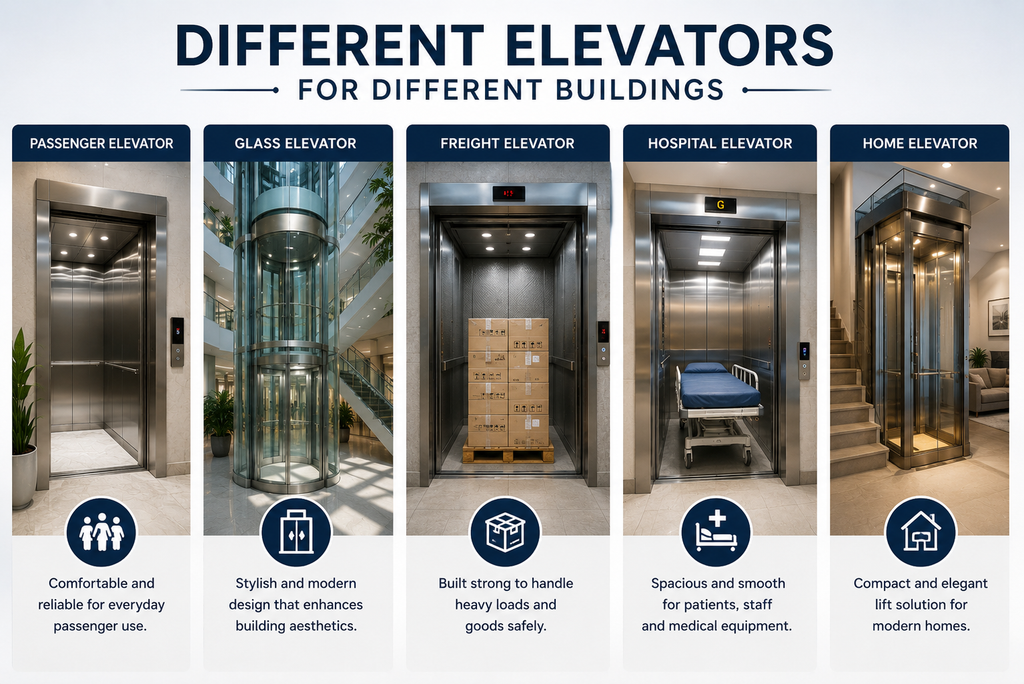
Different Elevators for Different Buildings
Elevator makers have to plan closely. A building cannot use one universal elevator setup. Needs vary from site to site.
Home Elevators
Home elevators are built for houses. That can include bungalows, villas, duplex homes, & multi story properties.
The main goal is easy movement up and down. They are also made to fit in smaller spaces. Interior looks can be changed too.
Residential Elevators
Home lifts work well in apartment buildings and other housing sites. They are used when people need to travel between several floors during the day.
Passenger Elevators
Passenger elevators are built to move people fast inside buildings. You will see them in offices, hotels, shopping and work sites, and also in apartment or other housing complexes.
Commercial Elevators
Commercial elevators are made for places where people ride a lot. In many cases, there are steady crowds throughout the day. You will see them in offices and malls. They are also found in hotels and other business buildings.
Hospital Elevators
Hospital lifts need extra planning. They move patients, nurses, doctors, family members, stretchers, wheelchairs, and medical tools. Because of that, the size of each lift matters.
The door setup matters too. You also have to set the right load limit. Then you match the lift rules to the hospital’s daily needs.
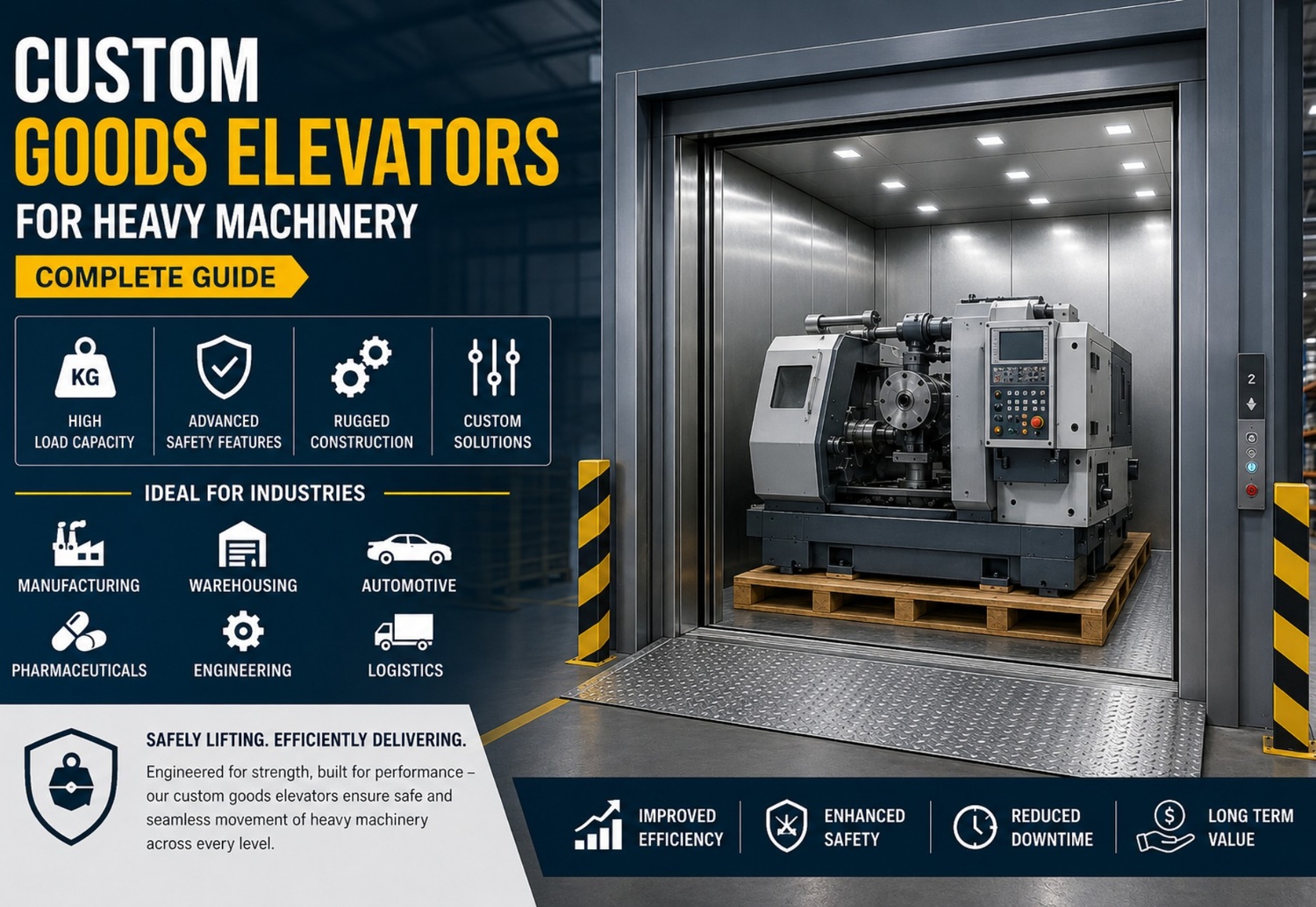
Goods Elevators
Freight elevators are built to move goods, supplies, machines, and other heavy items. You will see them in many kinds of places. For example, warehouses and factories use them a lot.
They also show up in offices, shops, and larger industrial sites where stuff must be shifted from one floor to another.
Custom Lifts
Not every building matches one set of size rules. Custom lifts can be made to fit the layout and needs of a specific project. This matters in high-end houses, odd floor plans, home upgrades, and certain business sites where space is tight.
An elevator ride does not always stop once it is installed. Some older units end up needing upgrades later on. These changes can target newer controls and safer systems. They may also help with speed, power use, and overall upkeep. Updates can even refresh the look of the building. In many cases, the goal is better day to day operation.
Elevator Modernization Can Involve Upgrading Components such as:
Modernization can be an effective option when replacing the entire elevator is unnecessary or when an existing system needs significant upgrades.
Controllers
Door systems
Drive systems
Cabin interiors
Control panels
Electrical systems
Safety components
Elevator requirements can vary significantly between cities because buildings, architectural styles, project types, and customer expectations differ.
Surat, home elevators are increasingly relevant for modern bungalows, villas, and multi-storey residences.
Ahmedabad, elevators are used across residential, commercial, industrial, and institutional projects.
Mumbai, space optimization is particularly important, making carefully planned residential and commercial elevator solutions valuable for many buildings.
Bangalore, modern residential and commercial architecture creates demand for technologically advanced and space-conscious elevator solutions.
In Chennai, elevators are used across homes, apartments, commercial buildings, healthcare facilities, and industrial projects.
Beyond these locations, elevator solutions can also be required in cities such as Vadodara, Gandhinagar, Rajkot, Hyderabad, Kolkata, Jaipur, Jodhpur, Udaipur, Bikaner, and other growing Indian markets.
The important point is that the elevator should be selected according to the building rather than simply choosing a model based on appearance or price.
Final Inspection and Customer Handover
After all tests and checks are done, the job moves to handover.
The customer then gets the details they need for safe and normal elevator use. This includes how the controls work, key safety steps, and what maintenance must be done and when.
The installation crew also finishes the elevator space so everything is in place. They make sure the unit is ready to run day to day.
At this point, the elevator changes from parts that were built on their own into a working vertical transport system.
Maintenance Keeps the Elevator Running
After the handover, you still need to keep going.
Elevator upkeep matters if you want the system to work well for years.
Planned checkups can spot early signs like worn parts, odd behavior, wiring problems, and door troubles. They can also point out other small issues before they grow into big ones.
With the right care plan, rides tend to feel smoother, the system stays dependable, and the equipment keeps performing.
Why Choosing the Right Elevator Manufacturer Matters
An elevator is not a short term purchase. It is part of how a building works for years. The maker you pick affects many things, from the engineering basics to the fit in your space. It also affects how well the system is set up, tested, and cared for over time.
A Good Elevator team should first listen to what the building needs. They should then suggest a fitting system and explain the options in a clear way. Custom work is important too, since no two projects are the same. After that, the install should be handled by trained staff. Support after the work is done should be real and easy to reach.
At Logolift, the aim is to offer elevator options for many types of buildings. This includes home lifts and residential elevators. It also covers passenger elevators and commercial models. There are solutions for hospitals, goods and service lifts, and custom projects. Modernization is included as well.
They offer MRL and hydraulic elevator technologies. Because of that, a plan can match the project. The plan can be based on available space, how the elevator will be used, the building style, and the technical needs.
From Factory to Your Home with Logolift
Every lift has a reason it starts. The first trip is never random. It starts when we listen to what the customer needs. Then the work moves to engineering and making parts. After that comes delivery and proper installation.
At the end, it goes through testing, commissioning, and handover. If you are in Surat and planning a new home lift, or in Mumbai for a residence, you still face the same task. You need the right system and the right maker.
For places in Ahmedabad with Commercial use, for projects in Pune, for new work in Bangalore, or special setups in Chennai, the choice still matters. At Logolift, a lift is not only a machine. It is a designed solution that links spaces.
It helps people move with more ease. It also fits modern building plans and supports better access. From the plant to your building, each step counts.
When engineering, the selected tech, safety checks, layout, fitting, and support all match, the lift can serve the building well for a long time.
FAQ
How long does it take to install an elevator? The time depends on the elevator type, building condition, site preparation, and project requirements.
Which elevator is best for a home Hydraulic or MRL ELevator? Choose MRL if you want a modern, space-saving elevator for a multi-storey home. Choose Hydraulic if your home is low-rise and the site is better suited to a hydraulic system.
Can old elevators be upgraded? Yes. Elevator modernization can upgrade components such as controllers, doors, drives, electrical systems, safety systems, and cabin interiors.
How do I choose the right elevator for my building? Consider the number of floors, available space, load capacity, usage, technology, design, safety requirements, and long-term maintenance needs.
What is the difference between MRL and hydraulic elevators? MRL elevators use a traction system without a separate machine room, while hydraulic elevators use hydraulic pressure to move the cabin.
What is Home lift load capacity? Load capacity is the maximum weight an Lift is designed to safely carry, including passengers or goods.
What does an Lift controller do? The controller manages the elevator’s movement, floor selection, door operation, stopping, and communication with safety systems.
What is the difference between geared and gearless Lifts? Geared elevators use a gearbox with the motor, while gearless elevators connect the motor more directly to the traction system.
What is an Lift pit? The pit is the space below the lowest landing that provides room for components and safety clearance where required.
What is Lift Modernization? Modernization means upgrading older elevator components such as the controller, drive, doors, electrical systems, cabin, or safety equipment.
Celebrities use home elevators to combine luxury, comfort, and convenience. Their lifts often feature glass cabins, premium finishes, designer lighting, smart controls, and advanced safety systems. Today, similar customized and space-saving home elevator designs are also available for modern Indian homes.
Owns an expansive luxury residence with modern design elements.
Sharookh Khan
1. Elevator System
Mannat is a 1920s-era, Grade III heritage structure, however, it has been refurbished to be turned into a six-storey annexe. And so, to make it convenient for the residents of the house to travel from one floor to the other, the house boasts of a special elevator system fitted inside it, according to Femina.
How Celebrities Design Their Home Elevators, Inside Luxury Home Lift Trends
Luxury homes aren’t just about grand entrances, lush gardens, or those designer interiors anymore. These days, there’s this one thing that kind of shows up as a symbol of comfort, elegance, and everyday modern living, and that is the home elevator. It’s like, suddenly, it means more than people thought, even if the rest of the place stays beautiful.
A lot of celebrities around the world have put in luxurious Home Lifts inside their mansions, not only because their houses have multiple floors but also because a Home Elevator brings convenience, a certain flair , and long term value. With premium finishes, along with smart controls, and custom interiors, these celebrity home elevators are made to mesh smoothly with the home overall architecture of the place.
The good news is that these luxury features are no longer only for celebrities, ya know. Nowadays modern homeowners can also get the same kind of designs, plus more advanced tech and even customizable home lifts, that kinda follow their daily routine and budget.
In this blog, we can kind of explore how certain celebrities design their home elevators an d what goes on behind that whole process. Also lets discover which luxury home lift trends are getting more attention lately and how they show up in modern homes, not that anyone needs a full blueprint, but still it’s interesting.
Why Celebrities Install Home Elevators
Celebrities often have big villas, duplexes, and multi story houses, like the kind where going from one floor to another is supposed to feel effortless and simple.
A luxury Home Elevator offers Several Benefits:
Comfortable movement between floors
Elegant architectural feature
Privacy and convenience
Easy access for children and elderly family members
Increased property value
Future-ready Home design
For celebrities, a home lift is not just a transport mechanism, it becomes this kinda extension of their home’s interior design and vibe.
Luxury Interior Designs That Stand Out
Glass Home Elevators: The Celebrity Favorite
One of the biggest attractions of celebrity home elevators is their stunning interiors.
Instead of ordinary cabins, luxury lifts often feature:
Premium wood panel finishes
Italian marble flooring
Glass walls
Mirror-finish stainless steel
Decorative lighting
Designer ceilings
Leather or textured wall panels
Customized handrails
Every element is carefully selected to match the home’s interior theme.
Whether the home is doing that modern minimalist look, or going full royal luxury appearance, the Elevator turns into kind of a seamless part of the whole design, without really feeling “added on”, you know.
Glass Home Elevators: The Celebrity Favorite
Transparent Glass Elevators are now one of the biggest luxury trends, really. They seem to create a kind of openness, while still giving you those beautiful views into the home’s interiors, you know.
These elevators create a feeling of openness while offering beautiful views of the home’s interiors.
Benefits include:
Elegant appearance
More natural light
Modern architectural appeal
Premium visual experience
Space-enhancing design
Many premium home lifts now include smart features such as:
Touchscreen control panels
Automatic floor selection
Smart access control
Voice-enabled operation
Mobile app connectivity
Energy-efficient standby mode
Automatic Rescue Device (ARD)
Real-time system monitoring
These technologies provide greater comfort, convenience, and peace of mind.
Personalized Cabin Designs
Celebrities rarely choose standard elevator cabins.
Instead, they customize almost everything.
Popular customization options include:
Premium Flooring
Marble
Granite
Wooden vinyl flooring
Anti-slip designer flooring
Elegant Wall Finishes
Wooden laminates
Stainless steel
Glass panels
Decorative textures
Designer Ceilings
Luxury lighting creates a warm and premium atmosphere inside the cabin.
Popular choices include:
LED strip lighting
Crystal-style lighting
Ambient lighting
Soft indirect illumination
Customized Buttons
Modern control panels now feature:
Touch-sensitive buttons
Glass-finish panels
LED indicators
Elegant metallic finishes
The result is a home elevator that feels like part of a luxury hotel rather than a standard lift.
Silent and Smooth Performance
One thing celebrities value most is privacy.
That’s why premium home elevators are designed for exceptionally quiet operation.
Modern gearless and Machine Room Less (MRL) elevators offer:
Low vibration
Minimal noise
Smooth acceleration
Comfortable stopping
Energy-efficient operation
The ride feels effortless, making daily travel enjoyable.
Safety Always Comes First
Luxury never means compromising on safety.
Celebrity homes typically include advanced safety systems such as:
Automatic Rescue Device
Emergency alarm
Battery backup
Door safety sensors
Overload protection
Emergency stop button
Interlocking doors
Child safety features
These systems ensure the lift remains safe during everyday use and unexpected situations like power failures.
Space-Saving Elevator Designs
Many people believe luxury elevators require a massive amount of space.
That’s no longer true.
Modern home lifts are designed to fit compact homes while maintaining a premium appearance.
Today’s space-saving designs include:
Machine Room Less technology
Compact shafts
Minimal pit requirements
Low headroom options
Indoor and outdoor installation
This lets homeowners fit those elegant lift systems even in homes that already exist , so it becomes way simpler to add them without a full rework or anything.
Matching the Home’s Architecture
One reason celebrity homes look so impressive is that every detail feels connected.
The Elevator is designed to complement:
Wall colors
Flooring
Furniture
Lighting
Doors
Staircases
Overall interior theme
Rather than standing out awkwardly, the lift blends naturally into the home’s design.
This approach creates a luxurious and harmonious living space.
Eco-Friendly Luxury Is the New Trend
Today’s luxury homeowners are becoming more environmentally conscious.
Modern premium Home Elevators often feature:
Energy-efficient motors
LED cabin lighting
Low power consumption
Eco standby mode
Regenerative drive technology (in selected models)
These features reduce electricity usage while maintaining outstanding performance.
Luxury and sustainability now go hand in hand.
Home Elevators as a Lifestyle Statement
Years ago, elevators were viewed simply as accessibility solutions.
Today, they represent a modern lifestyle.
Just like luxury kitchens, home theatres, and swimming pools have, in a way become very desirable features, stylish home Elevators are now also showing up as a premium home design kind of thing.
They showcase:
Modern thinking
Comfort
Innovation
Sophisticated living
Long-term planning
Luxury Trends Inspired by Celebrity Homes
If you’re planning a home elevator, here are some of the latest trends inspired by celebrity residences:
Panoramic glass cabins
Matte black and champagne gold finishes
Frameless glass doors
Hidden LED lighting
Smart touch controls
Voice-enabled technology
Customized cabin interiors
Minimalist luxury design
Silent gearless operation
Eco-friendly systems
These features kinda help build an elevator that’s actually functional, pretty stylish, and stays timeless.
Can You Bring Celebrity-Style Luxury to Your Home?
Absolutely,
Sure, celebrities might put money into fully customized elevators, with premium materials and all that, but honestly a lot of the same style cues are also showing up in modern homes now. You can pick similar concepts at different budget levels too, so it’s not only for the ultra glossy side of life, or whatever.
Homeowners can choose:
Compact luxury lifts
Customized cabin interiors
Glass elevators
Smart safety features
Elegant lighting
Premium finishes
Space-saving designs
The trick is picking a trusted Home elevator manufacturer that gives customization, safety, and dependable after sales service, like yeah reliable help after the install.
Choosing the Right Luxury Home Elevator
Before selecting a luxury home lift, consider the following:
Home Layout
Choose a lift that fits your available space without major structural changes.
Number of Floors
The elevator should be suitable for your home’s height and daily usage.
Interior Design
Select cabin materials that match your home’s architecture.
Safety Features
Never compromise on essential safety technologies.
Energy Efficiency
Choose modern systems that consume less electricity.
Future Needs
A Home Elevator should remain useful for every family member for years to come.
Why Modern Homeowners Are Following Celebrity Trends
Luxury home elevators aren’t just for celebrities anymore. With technology moving ahead and customization becoming easier, many homeowners across India are now opting for sleek, secure, and efficient lift solutions that noticeably boost both comfort and property value.
Even in a compact villa, a duplex, or a roomy bungalow, a carefully planned home elevator can change daily routines. Think panoramic glass cabins, tasteful interiors, quiet operation, and smart safety systems. They all sort of come together, making the whole place more functional yet still very sophisticated.
So if you want that premium feel in your home, going for a customized home elevator is a smart play. It gives you extra convenience right now, while also setting things up for what comes next later.
Conclusion
Celebrity home spaces kinda set the tone for a lot of the latest luxury elevator trends, think about sleek glass cabins and those designer interiors, plus intelligent controls and eco friendly tech. And honestly, these upgrades aren’t only for the rich and famous anymore. Today a modern home elevator delivers that same mix of style, protection, and real innovation for people Who want a calmer, more Elegant way of living.
Also, a thoughtfully designed home lift is not just a practical fix, it really turns into an architectural detail, like it belongs in the building, it shows off your personal taste and it makes everyday routines feel better. If you choose the right layout, the right tech, and a trusted manufacturer, you end up with a home elevator that brings luxury and keeps its value over time.
Why Choose Logolift for Your Luxury Home Elevator?
At LogoLift, we believe every home deserves a lift that is as stylish as it is safe. Our luxury home elevators are designed with premium finishes, advanced safety features, smooth and quiet operation, and complete customization to match your home’s architecture. Whether you’re building a new villa or upgrading an existing home, our expert team helps you create a home lift that blends elegance, comfort, and reliability.
Ready to bring celebrity-inspired luxury to your home? Contact LogoLift today and discover customized home elevator solutions designed for Modern Indian homes.
FAQ
What is the trend in luxury home design? Modern luxury homes focus on smart technology, premium interiors, energy efficiency, and stylish home elevators that combine comfort, convenience, and elegance.
What are the 2026 interior design trends? The top 2026 interior design trends include smart home technology, sustainable materials, minimalist layouts, natural textures, warm neutral colors, and luxury home elevators that enhance both style and everyday convenience.
Who Designs Elevators? Elevators are designed by expert manufacturers and engineers to ensure safety, efficiency, and a perfect fit for your home’s design.
Who is the Biggest Manufacturer of Elevators? India has several trusted elevator manufacturers. LogoLift is a leading Indian Home Elevator brand, known for its safe, stylish, and customized lift solutions, advanced technology, and reliable after-sales support.
Which is the Best Elevator in India? The best Elevator in India depends on your needs, space, and budget. LogoLift offers premium Home elevators with advanced safety features, stylish designs, smooth performance, and customized solutions for modern Indian homes.
Have you ever, like really, wondered what happens after you press the button on a Home lift? The doors close, the lift moves smoothly and in just seconds you’re on your desired floor. It seems easy, but behind that calm ride is a mix of smart tech, solid engineering and some advanced safety features , actually more than people notice at first.
Today, Home Lifts aren’t only a luxury thing anymore. They’ve turned into a practical choice for villas, duplex homes, bungalows, and Modern Residences. They simplify everyday life, improve accessibility for elderly family members and they can even add noticeable value to your property too.
If you’re thinking about installing a home lift, getting a clear idea of how it works can make it easier to pick the right model, and keep your family safe. In this guide, we’ll talk through it all in simple terms, from how a home lift works to the different types, key safety systems, the installation steps, maintenance tip, and also what you should check before buying.
What Is a Home Lift?
A Home Lift, sometimes referred to as a Residential Elevator, is a type of Lift Designed, mostly, for houses. Unlike Commercial Elevators you might see in malls or in office buildings, Home Lifts are usually more compact and quieter, plus they’re made to fit the everyday reality of residential spaces.
They are perfect for:
Villas
Duplex homes
Bungalows
Luxury apartments
Homes with elderly family members
Wheelchair users
Multi-storey houses
Beside making movement way easier, a Home Lift also adds more comfort and convenience, plus it brings long-term value to your home, in a manner that is pretty practical. It’s kind of that quiet upgrade people notice later, even if at first it seems small.
How Does a Home Lift Work?
A home lift may look sort of simple, but there are several parts working together so it can move safely, not just one thing. Lets see how the process happens, step by step, piece by piece.
1: You Press the Floor Button
The process begins when you press the floor button. The lift quickly receives your command and prepares to move.
2: The Controller Takes Charge
The controller is the brain of the elevator.
It decides:
Which direction the lift should move
How fast it should travel
When to stop
When to open the doors
Everything happens automatically within seconds.
3: The Motor Starts Moving
Once the controller gives the command, the motor starts working.
Depending on the lift technology, it may use:
Gearless technology
Hydraulic system
Traction system
Screw drive technology
The motor lifts or lowers the cabin smoothly.
4: The Cabin Travels Safely
The lift cab moves along pretty rigid guide rails that are actually set inside the lift shaft.
Modern home lifts are designed for:
Smooth movement
Low noise
Less vibration
Comfortable travel
You hardly feel the movement while travelling.
5: Safety Sensors Keep Checking
While the lift is moving, several sensors are working continuously
They monitor:
Door position
Lift speed
Weight inside the cabin
Floor position
Motor performance
If anything unusual happens, the safety system immediately takes action.
6: The Lift Stops at the Right Floor
Once the lift reaches your selected floor, it stops accurately.
The doors open automatically, allowing passengers to enter or exit safely.
Is a Home Lift Safe?
Yes,
Modern Home Elevators, they’re built with several protective subsystems, that guard riders throughout nearly every trip.
In practice, manufacturers craft residential lifts while obeying tight quality & safety standards , so it is not just a “maybe” thing.
Whether you’re in there Every day or using it only sometimes, these protective elements support dependable performance during each passage.
Important safety features that every home lift really should have Before you buy a Residential Elevator, look closely to see if it includes these must-have safety features.
Automatic Rescue Device (ARD)
If there is a power cut, the lift automatically moves to the nearest floor and opens the doors, allowing passengers to exit safely.
Battery Backup
Battery backup keeps important functions running during power failures.
Door Safety Sensors
This is especially useful for children and elderly people.
Emergency Alarm Button
These sensors stop the doors from closing if someone is standing in the doorway.
Passengers can press the alarm button if they need assistance.
Overload Protection
The lift does not operate if the maximum weight limit is exceeded.
Automatic Door Lock
The doors remain locked while the lift is moving.
They only open after the cabin reaches the correct floor.
Emergency Braking System
If the lift detects abnormal movement, the emergency brake stops the cabin safely.
Smooth Start and Stop
Modern lifts start and stop gently, reducing sudden jerks.
This makes travelling much more comfortable.
Types of Home Lifts
Different homes require different lift technologies.
These are becoming one of the most popular choices for luxury homes.
3. Machine Room-Less (MRL) Lift
MRL lifts do not require a separate machine room.
Benefits
Saves space
Modern appearance
Lower construction cost
Ideal for homes with limited space.
4. Screw Drive Lift
Screw drive lifts move using a rotating screw mechanism.
Advantages:
Compact size
Easy installation
Low maintenance
Suitable for existing homes.
How Is a Home Lift Installed?
Many people think installing a home lift is difficult.
In reality, the process is well planned and handled by professionals.
Step 1
Site inspection
The installation team visits your home and checks the available space.
Step 2
Selecting the Right Lift
The lift is chosen based on:
Number of floors
Available space
Budget
Family requirements
Step 3
Design and Manufacturing
The lift is manufactured according to your home’s dimensions and interior style. In this case in Logolift is best for Elevator Manufacturer & installation.
Step 4
Installation
Experienced engineers install the complete lift system.
Step 5
Testing
Every component is tested before the lift is handed over.
Step 6
Final Inspection
The installation team checks:
Smooth operation
Safety features
Door functions
Floor accuracy
Emergency systems
Only after everything works properly is the lift ready to use.
Tips Before Installing a Home Lift
Buying a home lift is a long-term investment.
Keep these points in mind.
Choose a Trusted Brand
Always buy from an experienced home lift manufacturer that offers quality products and after-sales support.
Even if you don’t need a lift today, it can be pretty handy for elderly parents, for kids, or for the kind of future access needs that might show up later.
Consider Energy Efficiency
Modern home lifts consume less electricity and help reduce long-term operating costs.
Compare Different Lift Technologies
Each Lift Technology has its own Benefits
Choose one that suits your home, budget, and daily usage.
Ask About Maintenance
Regular maintenance keeps your lift running smoothly and safely for years.
Choose a company that provides reliable after-sales service.
Simple Maintenance Tips
A well-maintained lift lasts longer and performs better.
Follow these Easy Tips:
Schedule regular servicing.
Keep the lift clean.
Don’t overload the lift.
Report unusual sounds immediately.
Test emergency features regularly.
Never allow untrained people to repair the lift.
These simple habits help improve safety & Extend the life of your Elevator.
Benefits of Installing a Home Lift
Installing a home lift offers many long-term advantages.
Makes everyday movement easier.
Helps elderly family members stay independent.
Improves accessibility.
Saves time.
Adds luxury to your home.
Increases property value.
Enhances home safety.
Supports wheelchair access.
Gives your home a modern look.
Makes your home future-ready.
Common Mistakes to Avoid
Avoid these common mistakes before buying a home lift.
Choosing only based on price.
Ignoring safety features.
Buying without checking available space.
Selecting the wrong lift technology.
Skipping regular maintenance.
Not checking warranty and service support.
Ignoring future family needs.
Making the right decision right now, can save you money and kind of ensure better performance for years ahead, too.
Why Choose LogoLift?
Choosing the right home lift is not just about looks it’s also about choosing a brand you can trust. Logo Lift offers modern home elevators designed for safety, comfort, and long-lasting performance.
Whether you need a compact lift for a small home or a premium elevator for a villa or bungalow, every LogoLift is built with high-quality materials and advanced technology.
Our home lifts provide smooth and quiet operation, energy-efficient performance, automatic rescue during power failures, door safety sensors, and stylish cabin designs. With reliable after-sales support, LogoLift ensures a safe, comfortable, and worry-free experience for you and your family
Final Thoughts
A home lift is kind of more than just a simple way to go up and down between floors. It makes day to day living easier, boosts accessibility, &, honestly it also can add some real value to your Home. If you take a moment to understand how a home lift works, which safety features it includes, what technologies are out there, and what the installation process looks like, you’ll be able to choose with confidence.
Before you buy , always go with a trusted Manufacturer, keep safety at the center of the decision, and compare the different lift styles, because they’re not all the same. Also, it’s smart to invest in a high quality system with dependable service support. The right home lift becomes an investment that brings comfort, convenience, and a calmer kind of peace of mind for years ahead.
FAQ
What are the common problems with home lifts? Common home lift issues include power outages, door sensor faults, unusual noises, and minor control panel errors. Regular maintenance and professional installation help ensure safe, smooth, and reliable operation.
Which type of lift is best for a home? The best lift for a home depends on your layout and budget, with pneumatic vacuum lifts, hydraulic elevators, and machine-room-less (MRL) traction lifts being the top choices.
What is the most reliable lift? The most reliable Home Lift is one that combines advanced safety features, energy-efficient technology, durable components, and Professional installation. Choosing a trusted manufacturer with reliable after sales service ensures smooth, safe, and long-lasting performance.
Which lifts are best for home lift in provide a Indian Company? The best home lift depends on your needs. MRL gearless lifts are ideal for most homes, hydraulic lifts offer smooth rides for low-rise buildings, and vacuum lifts are best for easy installation with minimal construction.
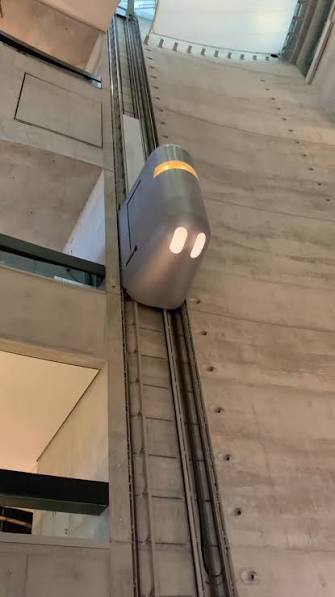
Mercedes-Benz Museum Elevators (Stuttgart, Germany)
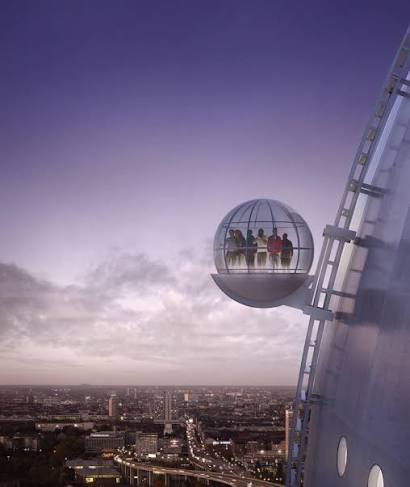
SkyView at the Avicii Arena (Stockholm, Sweden)
Taipei 101 Elevators (Taipei, Taiwan)
1. Bailong Elevator (Hunan, China)
The Bailong Elevator, also called the “Hundred Dragons Elevator”, is kind of the worlds tallest outdoor Lift. It sits inside the spectacular Zhangjiajie National Forest Park, in Hunan Province, China, and it is built right into this huge sandstone cliff.
It stands at about 326 meters (1,070 feet) in height, and it takes visitors up to jaw-dropping lookouts over the park’s well known pillar shaped mountains. Those formations helped inspire the floating scenes that people saw in Avatar.
Key Highlights
World’s tallest outdoor elevator
Glass cabins with panoramic views
Reaches the top in about 90 seconds
Major tourist attraction in China
The Bailing Elevator kind of perfectly blends Modern engineering with this kind of natural beauty, so that thousands of visitors can, every day, get the chance to see one of China’s most iconic landscapes in a pretty unique way.
2. Shanghai Tower Elevators (Shanghai, China)
Inside the Shanghai Tower, you’ll find these elevators, and yeah they’re basically among the swifter ones in the world. The tower sits above 632 meters, so it kind of turns into one of the taller buildings on Earth, honestly.
Those high speed lifts, well they move at around 20.5 meters per second, basically near 73.8 km/h , and they can get visitors up to the observation decks in under a minute, like almost immediately.
Inside the Shanghai Tower, you’ll find these Elevators, and yeah they’re basically among the swifter ones in the world. The tower sits above 632 meters, so it kind of turns into one of the taller buildings on Earth, honestly.
Key Highlights
One of the World’s fastest elevators
Advanced energy-efficient technology
Smart destination control system
Smooth, comfortable ride despite incredible speed
These elevators show How the cutting edge technology can boost efficiency a lot while also giving a really excellent passenger experience, in a sort of smooth, well, coordinated way that just works.
3. Hammetschwand Lift (Lake Lucerne, Switzerland)
The Hammetschwand Lift is Europas tallest outdoor Elevator, it kind of welcomed people since 1905. Built right along a dramatic cliff above Lake Lucerne in Switzerland, the elevator climbs about 153 meters, in under a minute.
Key Highlights
· Europe’s tallest outdoor elevator
· Historic engineering achievement
· Spectacular mountain and lake views
· Popular tourist destination
Combining history with kind of breathtaking scenery, the Hammetschwand Lift still remains one of Switzerland’s more impressive attractions, like you can’t quite ignore it. It’s not just a ride, it’s really a whole way up there, and after, the view sort of stays with you.
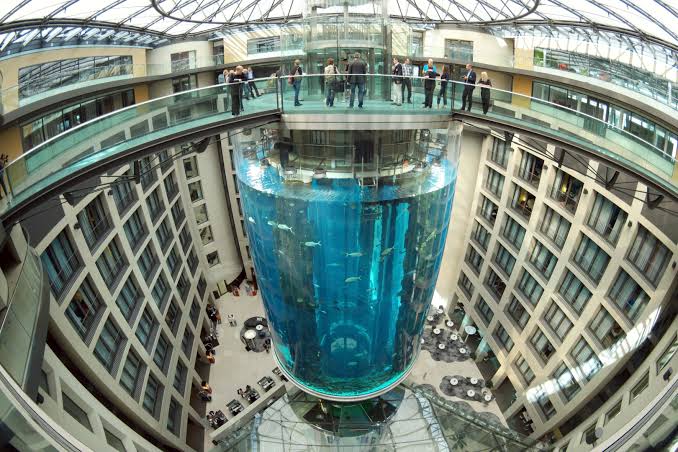
4. AquaDom (Berlin, Germany)
The AquaDom in Berlin was once kind of seen as one of the world’s most peculiar elevators, since it went right through the middle of this huge, cylinder shaped aquarium, packed with thousands of tropical fish.
People on board had this unforgettable journey, sort of enclosed by marine life the Whole time, so it became one of those most unusual elevator experiences that was ever put together.
Key Highlights
· Elevator inside a massive aquarium
· Unique tourist attraction
· Transparent panoramic cabin
· Innovative architectural design
Even if the original Aqua Dom was kind of kept closed for good after structural issues showed up, it still counts as a famous, almost legendary example of inventive elevator engineering, you know, the kind that really makes people pause.
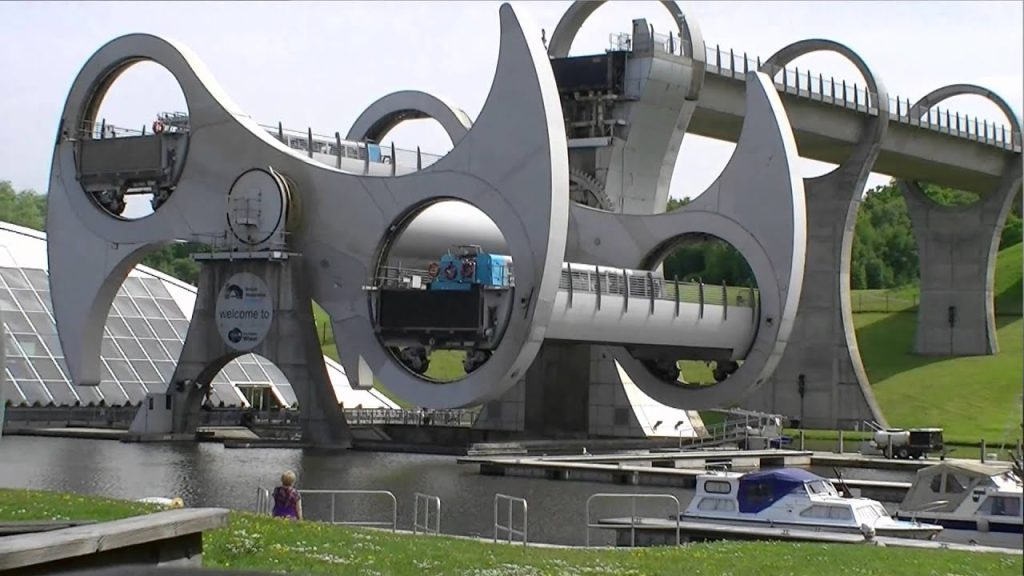
5. Falkirk Wheel (Falkirk, Scotland)
Unlike normal Elevators, the Falkirk Wheel is kind of a rotating boat lift sort of thing, it links two canal routes at different heights, sort of like it cant decide.
It was finished in 2002, and it’s the world’s only fully turning boat lift, so people keep saying. Its also widely seen as one of Scotland greatest engineering achievements, even if they mumble it a bit wrong sometimes.
Key Highlights
· World’s only rotating boat lift
· Uses minimal energy
· Rotates 180 degrees
· Award-winning engineering design
The Falkirk Wheel sort of shows how the lifts rules can be tweaked so they move full boats, not passengers, like, it is adapted for that whole concept.
6. The Gateway Arch Tram (St. Louis, USA)
So yeah, the famous Gateway Arch in Missouri has this special tram setup, it basically moves visitors up to the observation deck that’s inside the monument. and instead of feeling like those regular Elevators, The tram kind of mixes elevator like behavior with a Cable rail vibe so it can glide through the Arch’s curved interior, kind of seamless.
Key Highlights
Travels inside the iconic Gateway Arch
Hybrid elevator & tram technology
Unique capsule design
Offers panoramic city views
Its innovative transport system, kind of fascinated millions of visitors since that monument was opened.
7. Eiffel Tower Elevators (Paris, France)
No set of famous elevators feels really complete with the Eiffel Tower elevators kind of thing. Since the tower opened in 1889, its lifts have taken millions of visitors up to one of those world wide most recognizable landmarks.
Over time, Modern upgrades have kept the original engineering mostly intact, while tuning safety, efficiency, & reliability, in a more contemporary way.
Key Highlights
Historic elevator system
Serves one of the world’s most visited monuments
Unique diagonal travel mechanism
Exceptional views of Paris
These Elevators Represent more than transportation, like a piece of engineering history honestly. They’re not just going up and down, they kind of feel like a living artifact, you know, from back then.
8. Mercedes-Benz Museum Elevators (Stuttgart, Germany)
The elevators inside the Mercedes-Benz Museum are kind of shaped to resemble futuristic space capsules, you know, like that.
Visitors get shuttled straight to the top floor first, before they start a chronological ride through automotive history while descending through the museum.
Key Highlights
Futuristic capsule-inspired design
Innovative visitor experience
Smooth high-tech operation
Architectural attraction
The Elevator s really contribute a lot to the museum immersive storytelling experience, you know like it helps the whole vibe, somehow more than expected.
9. SkyView at the Avicii Arena (Stockholm, Sweden)
SkyView gives visitors a kind of remarkable ride, in a spherical glass gondolas, as they glide along the outside of the Avicii Arena.
And unlike the traditional elevators, these glass capsules move outside the building itself, so you can catch those breathtaking panoramic views of Stockholm, even while you’re in motion.
Key Highlights
Exterior glass gondola system
Stunning city skyline views
Unique architectural attraction
Safe & comfortable experience
SkyView has became, Sweden’s one of most popular tourist experience s, like people really like to go up there, you know. It’s sort of like a sky thing and visitors keeps coming, even when the weather is whatever.
10. Taipei 101 Elevators (Taipei, Taiwan)
The Elevators inside Taipei 101, were once officially recognized as the quickest passenger elevators in the world, or so the records say.
While moving at around 1,010 meters per minute they carry guests from the fifth floor up to the observation deck in roughly 37 seconds.
Key Highlights
Ultra-high-speed elevators
Advanced pressure control system
Comfortable ride despite incredible speed
Engineering masterpiece
These elevators still kind of represent the future of vertical transit through a mix of innovation, precise design, and passenger comfort, in that kind of smooth, not rushed way.
What Makes These Elevators So Special?
Each of these Elevators stands out for different reasons:
Exceptional engineering innovation
Record-breaking height or speed
Unique architectural integration
Historical significance
Memorable visitor experiences
Advanced safety and technology
Iconic tourist destinations
Together, they demonstrate how elevators have evolved far beyond simple transportation systems.
The Future of Elevator Technology
Modern Lifts are becoming smarter, faster, and more sustainable. Emerging technologies include:
AI-powered traffic management
Touchless controls
Smart destination dispatch systems
Energy-efficient regenerative drives
Predictive maintenance using IoT
Advanced safety monitoring
Eco-friendly elevator designs
These innovations will keep on improving, convenience efficiency and passenger safety in residential commercial and public spaces, sort of. You’ll probably notice the whole thing feels more streamlined too, not just safer.
Conclusion
The world’s most famous elevators showcase the perfect blend of engineering excellence, architectural creativity, and technological innovation. Whether it’s the towering Bailong Elevator rising through China’s cliffs, the record-breaking speed of Taipei 101, or the historic charm of the Eiffel Tower elevators, each system offers a unique story and unforgettable experience.
As cities continue to grow vertically, elevators will remain one of the most important innovations in Modern infrastructure. These iconic elevators not only move people efficiently but also inspire millions with their remarkable design and engineering achievements.
After exploring some of the world’s most famous elevators, it’s clear that modern vertical transportation is about more than simply moving between floors. Safety, innovative engineering, energy efficiency, and user comfort have become essential features of today’s elevator systems. Whether for Home Elevator , commercial buildings, hospitals, or industrial facilities, choosing a trusted elevator manufacturer ensures long-term reliability, smooth performance, and peace of mind.
If you’re looking for premium elevator solutions in India, LogoLift offers a wide range of modern elevators designed to meet diverse residential and commercial needs. From stylish Home Elevators & Villa Lifts to Goods Elevators, Hospital Elevators, and customized lifting solutions, LogoLift combines advanced technology, elegant designs, and high safety standards. With professional installation, dependable after-sales support, and a commitment to quality, LogoLift helps make vertical mobility safer, smarter, and more convenient for every space.
Ready to Upgrade Your Vertical Mobility?
Whether you’re planning a new home, upgrading a commercial building, or looking for a safe and stylish elevator solution, Logolift is here to help. Explore our range of premium Home Elevators, Passenger Lifts, Goods Elevators, and customized lifting solutions designed for comfort, safety, and long-term performance.
Contact LogoLift today for expert guidance and a free consultation. Let our experienced team help you choose the perfect elevator that matches your space, budget, and mobility needs.
As more people, homeowners especially, try to make their spaces more accessible and comfortable, mobility solutions are now kind of a must in modern home design. and yeah, convenience matters too. Whether you’re planning for older family members, supporting someone with limited mobility, or just future-proofing the place so it doesn’t feel “random” later, two go-to options often show up: Small Home lifts & Stairlifts.
Both of them help someone move safely between levels, but they really aren’t the same thing. A stairlift is mainly for one person who travels along an existing staircase, sort of like a tailored ride. A small home lift, on the other hand, gives you a true vertical transportation setup so more of the household can use it, not just a single traveler.
If you’re stuck on what’s the better investment, this guide breaks down small home lifts vs stairlifts across cost, comfort, safety, accessibility, installation, upkeep, and long-term value, so you can decide with less guesswork and more confidence.
What Is a Small Home Lift?
A Small Home Lift is basically a compact residential elevator, meant to give smooth and kind of convenient travel between floors inside a house. Unlike the traditional commercial type, these home lifts need only minimal room, and they’re especially built for villas, duplex homes, bungalows, townhouses, and standalone properties.
Today’s home lifts blend smart engineering with tasteful interiors, so they tend to look good and feel practical in a modern residence. They work well for moving people too, and also wheelchairs , groceries, luggage and other daily things without too much fuss.
Key Features of a Small Home Lift:
Compact and space-saving design
Smooth and quiet operation
Energy-efficient technology
Automatic doors and intelligent controls
Advanced safety systems
Premium cabin finishes
Suitable for all age groups
Wheelchair-friendly accessibility
A small home lift isn’t just a mobility solution anymore, it’s also a real upgrade that makes day to day living more convenient and comfy. It tends to add that extra sense of comfort, in a way that can boost the property value too, honestly.
What Is a Stairlift?
A stairlift is a motorized chair on a rail fixed to the existing staircase. it moves one person at a time from one level to another while that person stays seated, and yes it is meant for comfort.
Stairlifts are often placed in homes where an older adult or a person with limited mobility needs a hand getting up the stairs. since they ride along the current steps, they usually ask for less structural work than a traditional home lift would.
Even though stairlifts address a particular mobility problem, they are mostly designed for one individual, rather than being used to support everyone in the household.
Small Home Lift vs Stairlift: A Detailed Comparison
Feature
Small Home Lift
Stairlift
Passenger Capacity
Multiple passengers
One person
Wheelchair Access
Yes
No (standard models)
Comfort
Spacious and smooth
Seated travel only
Design
Modern and elegant
Functional
Property Value
Increases home value
Minimal impact
Accessibility
Suitable for everyone
Mainly for one user
Safety
Advanced multi-layer safety features
Basic safety features
Carrying Items
Yes
Limited
Long-Term Investment
Excellent
Moderate
Customization
Highly customizable
Limited
Space Requirements
One of the biggest concerns homeowners have is whether a mobility solution will, actually fit inside their existing home, like in real life not just on paper.
Small Home Lift
Modern compact home lifts are built to take up very little floor space. A lot of models can be installed without needing a big machine room so they work well for fresh builds, and also for renovation jobs.
Since they are offered in different sizes and setups, homeowners can pick a configuration that matches their interior layout, almost like it was always there.
Stairlift
A stairlift sorta uses the existing staircase by attaching a rail along one side, so you don’t really need a lift shaft. Still, the rail and the chair stay visible, and that can reduce the usable width of the stairs, especially when everything is folded.
With narrow staircases this can sometimes play a part in everyday movement for the rest of the family too.
Comfort and Everyday Convenience
Comfort often matters a lot when you have to choose between a home lift and a stairlift, like really a lot.
A small home lift gives you that steady, quiet & pretty comfy movement. It’s easy for more than one family member to use, and it handles everyday things just fine too, like groceries, shopping bags, baby strollers, even wheelchairs and luggage. People basically step into the cabin, press a button and then move between floors in a calm, comfortable way.
A stairlift works differently. It asks the user to sit securely first, and then it carries them along the stairway. It can be great for one person mobility needs , but it’s not as good when you want to move extra items or carry multiple passengers at the same time.
So if a household wants more convenience in daily routines, a small home lift tends to be the more flexible choice…
Safety Features
Safety is one of the most important factors when investing in any home mobility system, like really it should always be first.
Today, modern Small Home Elevator are equipped with advanced safety technologies, that keep things running reliably every single day.
Common safety features include:
Emergency alarm
Battery backup during power failures
Automatic rescue device
Door interlock systems
Overload protection
Emergency stop button
Smooth start and stop mechanism
Child safety features
These systems are kind of designed to give homeowners a sense of confidence and this calm, peace of mind thing.
Stairlifts also come with safety features like seat belts, obstacle sensors, swivel seats, & safety brakes. They work pretty well for personal everyday use but overall the functionality feels a bit more limited, compared to a fully enclosed home lift which is usually a much bigger setup.
Accessibility for Every Family Member
Accessibility is Where small Home lifts have a significant advantage.
A Home Lift is designed for:
Senior Citizens
Children
Wheelchair users
People recovering from surgery
Individuals with mobility challenges
Pregnant women
Families carrying heavy items
These systems are kind of designed to give homeowners a sense of confidence and this calm, peace of mind thing.
Stairlifts also come with safety features like seat belts, obstacle sensors, swivel seats, and safety brakes. They work pretty well for personal everyday use but overall the functionality feels a bit more limited, compared to a fully enclosed home lift which is usually a much bigger setup.
Design and Home Aesthetics
Today’s homeowners Want access solutions that kind of complement Modern Interiors rather than pulling focus or making it look out of place.
Small home lifts are around in elegant designs, with premium finishes, glass panels, stylish lighting, and interiors you can tune to your own taste. They may become a sort of sophisticated architectural detail , that actually supports the overall look of the home.
Stairlifts, on the other hand , lean mostly toward functionality . Even though the newer models are more compact, the visible rail and chair stay attached to the staircase and they can feel less seamless within luxury interiors.
So if keeping a premium appearance is a key priority, a small home lift tends to offer the more refined way forward.
Long-Term Value and Investment
When people compare the costs, most homeowners will first look at the purchase price. But honestly the longer-term value is just as important , maybe even more, depending on how long they plan to stay there.
A small home lift offers benefits that extend far beyond mobility, including:
Increased property value
Enhanced daily convenience
Better accessibility for future needs
Improved home functionality
Greater appeal for future buyers
A stairlift usually comes with a lower upfront investment, but the way it works is kind of narrow. It ’s basically tied to one person , and also to one specific kind of need, so the functionality is limited in a straightforward way.
For homeowners who expect to remain in the property for years , or who are trying to nudge resale value upward later, a compact home lift often ends up meaning more overall value.
Maintenance and Durability
Routine maintenance helps keep both systems running safely and efficiently, in a way that you notice over time, more or less. Small home lifts are built with solid components and newer tech that are meant to back reliable long term performance when they are serviced regularly , not just “Whenever”.
Stairlifts also take periodic care, especially around the rail system, motor, batteries , and the moving parts that do the heavy work. Picking a trusted manufacturer with proper installation, plus dependable after-sales support, is essential for either setup, really.
Which Option Is Right for You?
Routine maintenance helps keep both systems running safely and efficiently, in a way that you notice over time, more or less.
Small home lifts are built with solid components and newer tech that are meant to back reliable long term performance when they are serviced regularly , not just “whenever”.
Stairlifts also take periodic care, especially around the rail system, motor, batteries , and the moving parts that do the heavy work.
Picking a trusted manufacturer with proper installation, plus dependable after-sales support, is essential for either setup, really.
A stairlift may be suitable if:
Only one person requires mobility assistance.
Structural modifications need to be minimal.
The primary goal is basic stair access.
A small home lift is the better option if:
Multiple family members will use the system.
Wheelchair accessibility is required.
You want a stylish and modern mobility solution.
You’re planning for future accessibility.
You want to enhance your home’s value and convenience.
Why Choose Logolift Small Home Lifts?
At Logolift, we get it that every house is kind of unique in its own way. Thats why our compact home lifts are made to pull together safety, comfort, and a more Modern appearance, all while slipping in smoothly with residential spaces that are already there. It feels sort of seamless, you know, even if the space is not that big.
Our home lift solutions are designed with features such as:
Whether you’re building a new home or doing a more complex upgrade on what you already have, Logolift offers lift for the home type of solutions that really can boost accessibility , without ever ruining the look , or the overall vibe.
Conclusion
Small home lifts and stairlifts both help with mobility , but theyre not really the same thing. A stairlift tends to be a neat practical option for people who need a hand getting up and down stairs, and usually thats it. A small home lift on the other hand gives a more complete “whole household” type of support, so it can be useful across different situations not just one routine movement.
If you want more comfort, easier access, a sleeker look, better property appeal, and that long term convenience factor, then a small home lift wins out pretty clearly. It makes daily life feel simpler, & it also quietly gets your home ready for what might come later, which makes it a sensible investment for Modern families.
Picking the right mobility solution today can help your home feel safer, more welcoming & genuinely easier to use for years , maybe even longer than you expect .
For a free in-home evaluation to determine whether a home elevator or stairlift is right for you, call +91 9974053532 Today or complete our convenient online contact form.
Frequently Asked Question
Which type of lift is Best for a Home? A small home lift is the best choice for most homes, offering superior comfort, safety, accessibility, energy efficiency, and long-term value while complementing modern home designs.
What is the disadvantage of a stair lift? A stair lift requires staircase space, may not suit wheelchair users, and only provides limited floor-to-floor access compared to a home lift.
Which is the safest home elevator in India? The safest home elevators in India feature multi-layered safety circuit loops, full-height infrared light curtains, and built-in automatic rescue devices (ARD). Top-tier brands offering these fail-safes include Nibav Lifts (pneumatic), Elite Elevators (partnered with Logolift.
How much does a small home lift cost in India? A small home lift cost depends on size, design, floors, and customization. LogoLift provides safe and stylish home lift solutions with customized pricing.
Which lift is better, Nibhav or Logolift? Both offer home lift solutions, but the best choice depends on safety features, technology, customization, installation quality, and after-sales support. LogoLift focuses on providing reliable, stylish, and customized home elevators for modern homes.
What is the size of the smallest lift for a house? The tiniest home lift is usually a pneumatic vacuum lift, which is “pit-less” by design and so it needs less space for installation. Typical private lift cabins generally measure about 3 feet wide by 4 feet deep , & that means you need a host way that is at least 4 feet wide and 5 feet down.
In today’s fast-moving Industrial World, Efficiency, Safety & productivity really matter if a business wants to keep winning. A lot of sectors like manufacturing, logistics, warehousing, automotive, pharmaceuticals, and engineering are constantly working with heavy machinery, equipment & materials that have to move between multiple floors. The old ways of shifting heavy loads, usually take too long, feel very labor-strong, and can also bring Real safety Concerns along with them.
This is exactly where Custom Goods Elevators come in, kind of like a game-changing fix. Built for heavy-duty use, these lifts give a safer, more dependable, and more effective way to carry machinery, raw materials, & industrial goods. And no, they’re not just Regular Elevators, Because Custom Goods Elevators are Engineered around specific operating needs, so they stay smooth and consistent even when the industrial conditions get harsh.
At Logolift we focus on smart Elevator Solutions that serve Residential Elevator, commercial, healthcare, & industrial spaces. So whether you’re hunting for a Home Elevator or maybe a Commercial Elevator, Hospital Elevator, Elevator Modernization, or a Custom Goods Elevator meant for heavy machinery, the point stays the same. strong performance, better safety , and long-term value that holds up, for years.
Understanding Custom Goods Elevators
A Custom Goods Elevator is a kind of lift system that’s made, kind of specifically, to move heavy materials, machinery, equipment, and general goods between different floors in a building. So basically it’s not a one size fits all situation, it’s kinda engineered around the facility , with specifics like load capacity, cabin dimensions, the lifting height, how frequently it runs each day , plus the safety standards that have to be met.
And unlike passenger elevators that lean more toward comfort and design, goods elevators are built more for sheer strength, durability, and fast material flow. You’ll typically see them in factories , warehouses, industrial plants, distribution centers, and Commercial Buildings, to move heavy goods, machinery, and materials between floors in a safer way.
Because these Elevators can be Customized, they Fit a lot of different use cases. For example, they can handle Everything from shifting Manufacturing equipment to moving bulky inventory and industrial tools, even when the tasks are slightly unusual or the space is tight.
Why Heavy Machinery Requires Specialized Elevator Solutions
Heavy machinery is usually quite pricey, rather sensitive, and it can be a pain to relocate safely . When it is handled in the wrong manner, it might end up with equipment damage, unsafe workplace incidents, plus those expensive operational holdups. Standard lifting systems are rarely equipped to handle such demanding requirements.
Custom goods elevators sort of , address these challenges by providing a dedicated transportation solution that ensures safe and efficient movement of heavy equipment. These elevator units are specifically designed to endure high loads while keeping smooth , stable operation throughout.
Businesses that put money into Customized Elevator systems often see less need for manual handling, a smoother workflow efficiency, better workplace safety, and even lower maintenance costs over time too.
One of the most important advantages of a custom goods elevator is that it can haul substantial weight. Depending on the specific operational needs, these kinds of lifts can be engineered to move loads that vary from just a few hundred kilograms up to several tons , so it really fits the whole range.
This capability makes them ideal for industries that frequently move heavy machinery, production equipment, raw Materials, & industrial goods.
Robust Construction
In industrial environments you really want equipment that can take it day after day, even in harsh conditions. For this reason, goods elevators are usually put together with reinforced steel frameworks, heavy duty platforms, and sturdy components that help keep everything dependable for the long haul.
Their rugged build lets them run quite efficiently even when the manufacturing floors ,and the warehouse areas are really demanding, and yeah that kind of setting where everything matters.
Custom Cabin Dimensions
Every industry has different transportation requirements. Some companies have to deal with elevator cars that can carry heavy machines and still stay stable, While other places really want wider platforms for stuff stacked on pallets.
With tailor-made cabin dimensions, businesses can sort of squeeze out better operational efficiency, because the lift matches their particular devices and cargo, not the generic setup.
Smooth and Stable Operation
Transporting sensitive machinery requires precise and stable movement. Modern goods elevators incorporate advanced drive systems that minimize vibrations and sudden movements.
This smooth operation helps protect valuable equipment during transportation and reduces wear and tear on the elevator system itself.
Advanced Control Systems
Today’s custom goods elevators are equipped with intelligent control systems that simplify operation while improving safety & efficiency.
Features like automated controls, load monitoring & diagnostic systems , help keep everything running smoothly. They also make proactive upkeep possible, because you can catch issues early and react fast before anything really derails.
Industries That Benefit from Goods Elevators
Manufacturing Facilities
Manufacturing plants regularly transport machinery components, tools, and production materials between floors. Goods elevators streamline these operations and help maintain uninterrupted production workflows.
Warehouses and Distribution Centers
Modern warehouses use Goods Elevators to move inventory, pallets, and packaged products quickly, improving storage capacity and ensuring smooth, efficient operations.
Automotive Industry
Automotive facilities frequently transport engines, vehicle parts, Equipment, & Manufacturing Tools. Custom goods elevators provide a safe and efficient solution for these demanding transportation requirements.
Pharmaceutical Industry
Pharmaceutical Manufacturers need a more precise, kind of reliable, means of transport for equipment, packaging materials, and the actual products. In practice, goods elevators help keep things moving smoothly in the facility while also meeting those strict quality requirements, not just throughput.
Engineering Workshops
Heavy Engineering Face heavy machinery as well as fabricated bits, sometimes they even move assemblies. Goods elevators make moving stuff more simple and faster, boosting overall workplace productivity in a way that feels more streamlined.
Commercial Buildings
Big commercial places like shopping malls, hotels, and retail centers end up using goods elevators to move supplies, equipment, and even maintenance materials, all while not really disturbing the customer traffic. It’s kind of a practical setup you don’t have to think about too much, because the flow stays steady, and the deliveries get handled inside their own channels.
Safety is a top priority in custom goods elevators. Advanced safety features protect both operators and heavy materials, ensuring secure and reliable transportation.
Overload Protection
Overload protection systems keep the elevator from moving if the load goes over the capacity that was originally designed. This safety feature reduces the likelihood of accident events, and also helps prevent wear, and tear on equipment that can happen otherwise.
Emergency Stop Function
Emergency stop buttons give quick control right when something unexpected happens, and that helps boost workplace safety while also keeping day to day operations reliable more or less.
Automatic Door Locking
Doors remain securely locked during operation, preventing accidental opening and ensuring safe transportation.
Smooth Start and Stop Technology
Controlled acceleration and deceleration reduce impact forces and protect transported equipment from unnecessary movement.
Backup Power Systems
In the case of a power outage, the backup systems help in keeping operation safe and preventing interruptions , to the critical industrial processes, like a kind of quiet safety net.
Safety Sensors and Monitoring
Advanced monitoring systems are always tracking elevator performance, and they figure out possible trouble spots before they turn into major headaches. In other words they continuously watch how things behave, and then alert someone in advance, so it does n’t get too serious later on.
Benefits of Installing a Custom Goods Elevator
Improved Operational Efficiency
A dedicated goods elevator can cut down the time it takes to move heavy machinery and materials between floors, a lot. With a quicker ride, the overall productivity goes up and the operations feel more streamlined, kind of like work flows without that extra wait.
Enhanced Workplace Safety
When people do manual handling of heavy equipment, it can quietly raise the risk of workplace injuries , maybe because of awkward lifting. Goods elevators help reduce that , giving a more secure way to move cargo around, rather than relying on rough transport methods all the time.
Reduced Equipment Damage
Stable, controlled transportation helps protect crucial machinery from accidental harm while it’s getting moved around. It keeps everything more orderly. That way the valuable equipment doesn’t end up damaged even during the simplest transit, like from one site to another.
Better Space Utilization
Custom elevator designs can be tailored to fit available building space, helping businesses maximize operational efficiency.
Long-Term Cost Savings
Even if putting in a Custom Goods Elevator takes some upfront money, the long term gains are usually pretty solid, like lower labor costs and fewer workplace incidents. You also end up with less equipment harm, and overall work output feels a lot better. Sometimes people even say its kind of calmer day to day, because everything moves more smoothly.
Why Customization Matters
Every industrial plant has its own kind of operational friction and transport needs. Usually, a standard elevator setup might not cover the real capacity, exact size, or the speed and reliability you need for the specific application. Sometimes it just doesn’t fit the bill, not in dimension either, and that’s all.
Customization lets a business sort of shape an elevator setup so it matches their actual needs in a pretty precise way. Things like the load capacity, the size of the platform, the door configuration, speed, and even the operational controls , can all be adjusted so the ride stays as efficient as possible while also boosting safety.
This sort of tailored approach makes sure businesses get a solution that kind of supports what they are doing right now, and also the next phase of future growth.
Logolift: Beyond Goods Elevators
At Logolift, we understand that every building has different mobility requirements. That’s why we offer a complete range of elevator solutions designed to serve residential, commercial, healthcare, and industrial sectors.
Home Elevators
Our home elevators blend luxury, convenience, and accessibility, not that surprising. Built to blend in with modern architecture, they make rides feel smoother and a bit more personal. They enhance comfort too, and they add real value to residential properties at the same time, kind of like a quiet upgrade.
Commercial Elevators
Commercial Buildings require reliable transportation systems capable of handling high passenger traffic. Our commercial elevators deliver exceptional performance, durability, and aesthetics.
Hospital Elevators
Healthcare environments Demand smooth, safe, and dependable transportation solutions. Our hospital elevators are specifically designed to accommodate patients, medical staff, and essential equipment.
Elevator Modernization
Outdated Elevator systems can reduce efficiency and increase maintenance costs. Our modernization services upgrade existing elevators with advanced technology, improved safety features, and enhanced energy efficiency.
Custom Solutions
Every project is kind of unique, the engineering team does customized elevator solutions, made to match what each client really needs so the results are good for performance as well as long-term reliability.
Why Choose Logolift?
Choosing the Right Elevator Partner is Crucial for the success of any project. Logolift is committed to delivering superior quality, innovative engineering, and exceptional customer service
Our Strengths Include:
Customized Elevator Solutions
Advanced Safety Standards
Premium-quality materials
Professional installation services
Expert technical support
Reliable maintenance solutions
Modern engineering and design
Long-term performance and durability
From Residential homes to large industrial facilities, we provide elevator systems that meet the highest standards of safety, quality, and efficiency.
Conclusion
Custom Goods Elevators have kind of become a necessary element of modern industrial infrastructure. They offer a secure, effective, and dependable way to move heavy machinery, equipment, and materials across many levels. In the end, by boosting productivity, strengthening workplace safety, and also cutting operational costs, these elevators deliver real long-term value to companies in different kinds of industries.
Whether you run a manufacturing plant, a warehouse, an engineering workshop, or a Commercial facility, putting money into a customized goods elevator can really shift your daily workflow and help you stay ready for future growth.
At Logolift, w e are proud to provide industry leading Home Elevators, Commercial Elevators, Hospital Elevators , Elevator Modernization Services, and custom Goods Elevators, all made around the specific needs of every client. We focus on innovation, dependability, and customer satisfaction, so every elevator solution delivers strong results for years—coming back again and again, in a steady way.
Frequently Asked questions
What is a Custom Goods Elevator? A custom goods elevator is a specially designed lift used to transport heavy machinery, materials, and goods safely between different floors in industrial and commercial buildings.
How Much Weight can a Goods Elevator Carry? The load capacity varies based on requirements and can range from a few hundred kilograms to several tons.
Why Choose a Custom Goods Elevator over a Standard Lift? Custom Goods Elevators are Designed to match specific Load Capacities, Cabin Sizes, & Operational Needs, ensuring Better efficiency and safety.
Are Custom Goods Elevators safe for Heavy Machinery? Yes. They include safety features such as overload protection, Emergency Stop systems, Automatic door locks, & Smooth start-stop technology.
Does Logolift Provide Custom Goods Elevator Solutions? Yes. Logolift offers customized goods elevators along with home elevators, commercial elevators, hospital elevators, and elevator modernization solutions.
How do Goods Elevators improve workplace Efficiency? They reduce manual handling, speed up material transportation, minimize downtime, and improve overall productivity.