
An Elevator can seem basic from the street. Still, a safe ride depends on many steps working together. There is engineering, building in the workshop, setup for a specific site, on site installation, checks after install, and then regular care over time. Each part matters. The work starts with the first sketch in the plant and keeps going until people finally use the new unit. At Logolift, we do not treat elevator choice as a quick pick. We focus on the match for your building.
That means safety first, the right tech, the look you want, the load it must handle, the space it needs, and how well it should perform for years. You might be searching for a home lift in Surat, a residential unit in Mumbai, a commercial lift in Ahmedabad, a hospital elevator in Chennai, or a goods lift in Pune.
In every case, the process starts with proper planning. It ends with skilled fitting and thorough testing. Here is a closer view of how an elevator goes from the factory to your home or business.
Understanding the Elevator Requirement
First you figure out where the elevator will go and what jobs it will do. Each building is different. A small home might need a simple, space saving elevator. A mall or office area may want one that can move lots of people. A hospital setup has to match patient flow. A factory or warehouse often needs an elevator that can handle heavy loads.
During the planning stage, several factors are considered, including:
- Building height and number of floors
- Available shaft or installation space
- Required load capacity
- Number of passengers
- Travel distance
- Frequency of usage
- Door configuration
- Interior design requirements
- Safety requirements
- Available power supply
- Type of elevator technology
- Future maintenance requirements
This information helps engineers determine the most suitable elevator configuration.
Engineering and Elevator Design
First, We confirm the needs and goals. After that, the elevator goes to the engineering and design step. Engineers use math checks and clear drawings. The plan has to cover key items like the size, the weight it must handle, the ride speed, and the building structure.
It also needs the right electrical parts. Safety gear and install details must be part of the design from the start. With a custom job, the work takes extra care. The unit might have to fit in a tight or odd area. It may also need to match a chosen look in the space. At Logolift, we build elevator options for homes, offices, factories, care centers, and other types of buildings.
Selecting the Right Elevator Technology
One of the most important decisions is selecting the appropriate elevator technology.
MRL Elevators
MRL elevators are a type of machine room less system. They do not need a separate machine room the way older designs do. Because the setup is compact, the building can use less area. This also helps with newer design layouts.
You can look at MRL elevators for homes and offices. They fit well when space planning is a key concern.
Hydraulic Elevators
Hydraulic elevators use a hydraulic setup to raise and lower the car. In some buildings, especially low to mid-rise ones, this type can work well. It can also be a good fit when the site limits make hydraulic systems the better option.
Choosing between MRL, hydraulic, or another kind of elevator is not a random call. It depends on things like how tall the building is, how people use the space, what room is available, the expected weight load, the design plan, and what the project needs.
Latest Home Elevator Technologies MRL, Hydraulic & Gearless
Manufacturing the Elevator Components
After the design is finalized, the elevator components move into manufacturing.
An Elevator is made up of many interconnected components. These can include:
- Elevator cabin
- Landing doors
- Car doors
- Guide rails
- Controller
- Traction or hydraulic system
- Machine and drive system
- Ropes and suspension components where applicable
- Safety systems
- Control panels
- Push buttons
- Sensors
- Electrical components
- Emergency systems
- Interior finishing materials
Each component has an important role in the overall operation of the elevator.
The elevator cabin, for example, is not simply a box that moves between floors. It is designed around structural strength, passenger comfort, ventilation, lighting, door operation, controls, and aesthetics.
Creating the Elevator Cabin
For residential and luxury elevator projects, the elevator cabin is also an important part of interior design.
Homeowners may want their elevator to complement their flooring, walls, lighting, doors, furniture, and overall architectural style.
Depending on the project, elevator interiors can be customized in areas such as:
- Cabin finishes
- Flooring
- Ceiling design
- Lighting
- Handrails
- Control panels
- Door finishes
- Glass elements
- Stainless-steel finishes
- Decorative materials
This matters a lot for home elevators and residential elevators. In those cases, the lift is not just a way to move between floors. It also blends into the home and becomes part of the interior.
Quality Inspection Before Installation
Before an elevator arrives at the building, its parts have to pass required checks. Factory made parts are reviewed for the right size, surface finish, fit with other pieces, and basic function. Parts for power and parts for movement are tested based on what they are meant to do.
These checks catch problems early, so the work on site is smoother. They also help confirm that each part will work with the rest once the elevator is put together.
Transportation from Factory to Project Site
After the elevator parts are ready, the team packs everything and ships it to the job site.
That site might be a home, an apartment block, a hospital, an office, a mall, a factory, or another type of business place.
For Logolift jobs, the elevators can be delivered and fitted in many parts of India.
Examples include Surat, Ahmedabad, Mumbai, Pune, Bangalore, and Chennai. Other nearby areas may also be used based on what the project needs.
The transport step takes extra care. Elevator parts are big and heavy, and they need to be handled in a careful, correct way.
Preparing the Building for Elevator Installation
Before installation begins, the project site needs to be ready.
Depending on the elevator design, preparation may include:
- Elevator shaft readiness
- Pit preparation where required
- Landing openings
- Electrical power availability
- Structural requirements
- Door openings
- Machine or equipment space
- Waterproofing where required
- Proper measurements and alignment
The rules change based on the elevator model and the layout of the building. That is why the elevator maker, architect, main contractor, electrical crew, and building owner have to coordinate early.
Installing the Elevator Structure
After that, the installers start putting the elevator system together at the job site. First, they set up the guide rails and line them up with care. These rails help the car move straight up and down. Next, the team fits the door gear at each floor.
Then they install the cabin and connect the main mechanical and electrical parts. What gets installed can vary by the elevator type. Some jobs also include traction parts and motors.
Others use hydraulic equipment. Suspension parts, controller units, safety items, and other related systems may also be installed as part of the setup.
Installing the Control and Electrical Systems
The Elevator controller works like the main hub for the whole setup.
It takes in signals from the buttons on each floor and from the cabin panel.
It also controls how the car moves, when the doors open and close, and how precisely the lift stops at each floor.
Newer elevator units use updated control methods.
These aim to make rides feel steady, help save energy during travel, and make trips feel better for riders.
During this part, safety electrical circuits are put in place too.
Safety Comes First
Safety matters a lot in elevator work. Elevators have several safety parts. These parts are meant to keep riders safe and to reduce harm to the equipment.
Depending on the elevator system, these may include:
- Door safety systems
- Emergency alarm
- Emergency lighting
- Safety brakes
- Sensors
- Overload protection
- Emergency communication systems
- Door interlocks
- Speed monitoring
- Backup systems
The exact safety configuration depends on the elevator design and applicable requirements.
For this reason, elevator installation should always be handled by qualified professionals rather than treated as a simple construction or electrical project.
Testing and Commissioning
Once the installation is done, the elevator is not given to the customer right away. First, it has to go through commissioning. After that, testing starts. Team members check how it moves. They also look at how well it stops. Door opening and closing are tested too.
Next, they test the control system. They confirm the safety features work as they should. They inspect the electrical setup as well.
Tests can be run in more than one way. This helps confirm the elevator acts as planned. If anything needs change, they fix it first. Only then does the final handover happen.
Different Elevators for Different Buildings
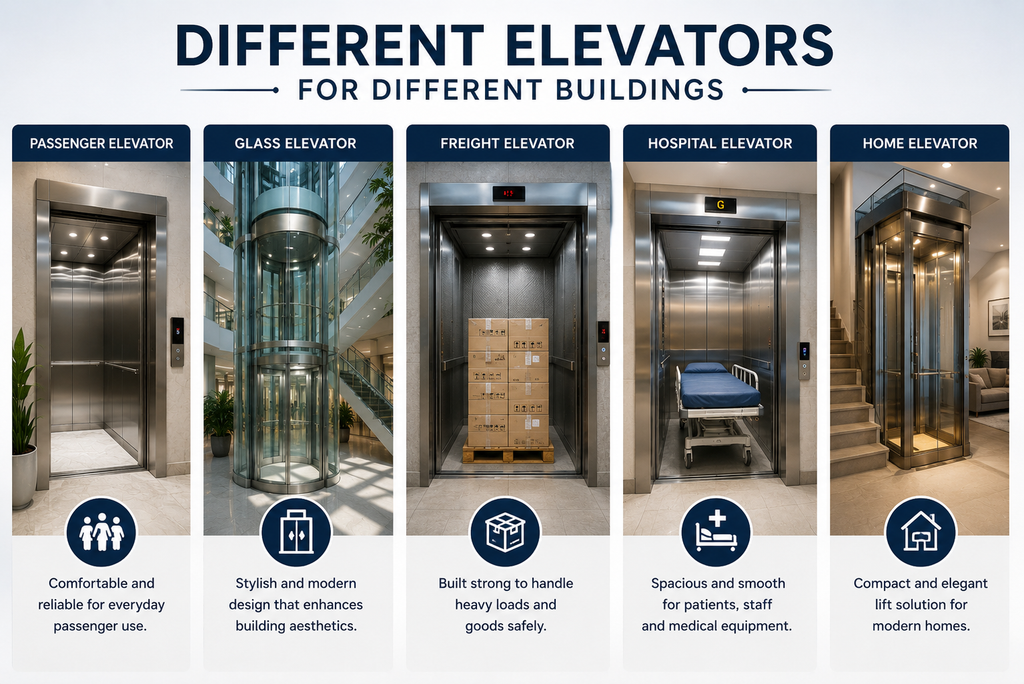
Elevator makers have to plan closely. A building cannot use one universal elevator setup. Needs vary from site to site.
Home Elevators
Home elevators are built for houses. That can include bungalows, villas, duplex homes, & multi story properties.
The main goal is easy movement up and down. They are also made to fit in smaller spaces. Interior looks can be changed too.
Residential Elevators
Home lifts work well in apartment buildings and other housing sites. They are used when people need to travel between several floors during the day.
Passenger Elevators
Passenger elevators are built to move people fast inside buildings. You will see them in offices, hotels, shopping and work sites, and also in apartment or other housing complexes.
Commercial Elevators
Commercial elevators are made for places where people ride a lot. In many cases, there are steady crowds throughout the day. You will see them in offices and malls. They are also found in hotels and other business buildings.
Hospital Elevators
Hospital lifts need extra planning. They move patients, nurses, doctors, family members, stretchers, wheelchairs, and medical tools. Because of that, the size of each lift matters.
The door setup matters too. You also have to set the right load limit. Then you match the lift rules to the hospital’s daily needs.
Goods Elevators
Freight elevators are built to move goods, supplies, machines, and other heavy items. You will see them in many kinds of places. For example, warehouses and factories use them a lot.
They also show up in offices, shops, and larger industrial sites where stuff must be shifted from one floor to another.
Custom Lifts
Not every building matches one set of size rules. Custom lifts can be made to fit the layout and needs of a specific project. This matters in high-end houses, odd floor plans, home upgrades, and certain business sites where space is tight.
Understanding Difference Standard & Custom Elevator Manufacturingz
Elevator Modernization
An elevator ride does not always stop once it is installed. Some older units end up needing upgrades later on. These changes can target newer controls and safer systems. They may also help with speed, power use, and overall upkeep. Updates can even refresh the look of the building. In many cases, the goal is better day to day operation.
Elevator Modernization Can Involve Upgrading Components such as:
Modernization can be an effective option when replacing the entire elevator is unnecessary or when an existing system needs significant upgrades.
- Controllers
- Door systems
- Drive systems
- Cabin interiors
- Control panels
- Electrical systems
- Safety components
Elevator requirements can vary significantly between cities because buildings, architectural styles, project types, and customer expectations differ.
Surat, home elevators are increasingly relevant for modern bungalows, villas, and multi-storey residences.
Ahmedabad, elevators are used across residential, commercial, industrial, and institutional projects.
Mumbai, space optimization is particularly important, making carefully planned residential and commercial elevator solutions valuable for many buildings.
Pune, elevators serve residential developments, offices, commercial buildings, and industrial applications.
Bangalore, modern residential and commercial architecture creates demand for technologically advanced and space-conscious elevator solutions.
In Chennai, elevators are used across homes, apartments, commercial buildings, healthcare facilities, and industrial projects.
Beyond these locations, elevator solutions can also be required in cities such as Vadodara, Gandhinagar, Rajkot, Hyderabad, Kolkata, Jaipur, Jodhpur, Udaipur, Bikaner, and other growing Indian markets.
The important point is that the elevator should be selected according to the building rather than simply choosing a model based on appearance or price.
Final Inspection and Customer Handover
After all tests and checks are done, the job moves to handover.
The customer then gets the details they need for safe and normal elevator use. This includes how the controls work, key safety steps, and what maintenance must be done and when.
The installation crew also finishes the elevator space so everything is in place. They make sure the unit is ready to run day to day.
At this point, the elevator changes from parts that were built on their own into a working vertical transport system.
Maintenance Keeps the Elevator Running
After the handover, you still need to keep going.
Elevator upkeep matters if you want the system to work well for years.
Planned checkups can spot early signs like worn parts, odd behavior, wiring problems, and door troubles. They can also point out other small issues before they grow into big ones.
With the right care plan, rides tend to feel smoother, the system stays dependable, and the equipment keeps performing.
Why Choosing the Right Elevator Manufacturer Matters
An elevator is not a short term purchase. It is part of how a building works for years. The maker you pick affects many things, from the engineering basics to the fit in your space. It also affects how well the system is set up, tested, and cared for over time.
A Good Elevator team should first listen to what the building needs. They should then suggest a fitting system and explain the options in a clear way. Custom work is important too, since no two projects are the same. After that, the install should be handled by trained staff. Support after the work is done should be real and easy to reach.
At Logolift, the aim is to offer elevator options for many types of buildings. This includes home lifts and residential elevators. It also covers passenger elevators and commercial models. There are solutions for hospitals, goods and service lifts, and custom projects. Modernization is included as well.
They offer MRL and hydraulic elevator technologies. Because of that, a plan can match the project. The plan can be based on available space, how the elevator will be used, the building style, and the technical needs.
From Factory to Your Home with Logolift
Every lift has a reason it starts. The first trip is never random. It starts when we listen to what the customer needs. Then the work moves to engineering and making parts. After that comes delivery and proper installation.
At the end, it goes through testing, commissioning, and handover. If you are in Surat and planning a new home lift, or in Mumbai for a residence, you still face the same task. You need the right system and the right maker.
For places in Ahmedabad with Commercial use, for projects in Pune, for new work in Bangalore, or special setups in Chennai, the choice still matters. At Logolift, a lift is not only a machine. It is a designed solution that links spaces.
It helps people move with more ease. It also fits modern building plans and supports better access. From the plant to your building, each step counts.
When engineering, the selected tech, safety checks, layout, fitting, and support all match, the lift can serve the building well for a long time.
FAQ
- How long does it take to install an elevator?
The time depends on the elevator type, building condition, site preparation, and project requirements. - Which elevator is best for a home Hydraulic or MRL ELevator?
Choose MRL if you want a modern, space-saving elevator for a multi-storey home. Choose Hydraulic if your home is low-rise and the site is better suited to a hydraulic system. - Can old elevators be upgraded?
Yes. Elevator modernization can upgrade components such as controllers, doors, drives, electrical systems, safety systems, and cabin interiors. - How do I choose the right elevator for my building?
Consider the number of floors, available space, load capacity, usage, technology, design, safety requirements, and long-term maintenance needs. - What is the difference between MRL and hydraulic elevators?
MRL elevators use a traction system without a separate machine room, while hydraulic elevators use hydraulic pressure to move the cabin. - What is Home lift load capacity?
Load capacity is the maximum weight an Lift is designed to safely carry, including passengers or goods. - What does an Lift controller do?
The controller manages the elevator’s movement, floor selection, door operation, stopping, and communication with safety systems. - What is the difference between geared and gearless Lifts?
Geared elevators use a gearbox with the motor, while gearless elevators connect the motor more directly to the traction system. - What is an Lift pit?
The pit is the space below the lowest landing that provides room for components and safety clearance where required. - What is Lift Modernization?
Modernization means upgrading older elevator components such as the controller, drive, doors, electrical systems, cabin, or safety equipment.
